
Home
HUMAN TRAFFICKING VICTIMS NEVER WANT TO BE CONTROLLED
Law enforcement frequently fails human trafficking victims.
Extreme control and surveillance delays victims from communicating or accessing legally guaranteed victim protections.
Human trafficking victims often live on the edge of survival, lacking basic human rights.
Victims often require a large personal injury law firm to enforce ALL legal victim protections.
Authorities receiving federal funding to combat human trafficking are obligated to support victim protections as a condition of grant compliance.
A human trafficking victim can dream of the following but never expect them to happen:
•Ability to directly call Morgan & Morgan, understand their policies, and communicate effectively to obtain the victim protections necessary for survival—something that cannot occur without traveling a hundred miles to escape traffickers’ control to write and speak a script on a public website.
•Law enforcement prosecuting traffickers rather than facilitating further harm.
•Law enforcement suspending IoT ISP (internet service provider) accounts facilitating human trafficking.
ALL HUMANS ARE BORN FREE AND EQUAL
A link between inalienable civil rights and human trafficking is clear.inalienable civil rights approach places anyone at the center of any credible action.
Traffickers have no credible action in response to inalienable civil rights.
Inalienable civil rights approach acknowledges governments are responsible for protecting and promoting rights of all people within their jurisdiction and have a legal obligation to eliminate trafficking related to exploitation.
Human trafficking victims should have the same rights as any other human when the crime begins.
Violations of basic human rights are prohibited under international human rights laws.
Human rights need to be figured every step as it shows the root causes of human trafficking.
- Unjust distribution of power
- Complicity in public sector
- Impunity is maintained for traffickers
- Patterns of discrimination
- Justice is denied to victims
- Demands derived from exploitation
Inalienable civil rights approach places anyone at the center of any credible action.
Traffickers have no credible action in response to inalienable civil rights.
Inalienable civil rights approach acknowledges governments are responsible for protecting and promoting rights of all people within their jurisdiction and have a legal obligation to eliminate trafficking related to exploitation.
Complicity in public sector creates obstruction of justice for trafficking victims. It doesn’t allow anyone to mention anything about trafficking crime observed or offer help to trafficking victims. Unfortunately, few people care about the reality of the situation. Nothing improves without the voice of disapproval. There is no accountability without publicity.
Corruption flourishes through complicity (bribes) in the public sector.
Victim protections are not enforced for decades.
Traffickers continue extreme control and surveillance.
Lack of inalienable civil rights concerns credible action from government employees, allowing trafficking victims access to justice, victim protections, and fair trial.
Inalienable Civil Rights include
Constitutional & Human Rights
Victim protections protect inalienable civil rights from being violated.
Inalienable rights: “Inalienable” means cannot be surrendered, transferred, or taken away, even by the government. In U.S. political theory (Declaration of Independence): Rights exist by nature, not by government permission. Government is instituted to secure those rights, not to grant them.
•One cannot consent to the loss of inalienable rights.
•Contracts cannot override Inalienable rights.
•Inalienable rights do not vanish by administrative convenience.
•There is no legitimate moral, legal, or philosophical basis to dismiss a natural person’s inalienable rights.
Constitutional Rights
The U.S. Constitution became effective in 1789.
The U.S. Constitution limits government power and protects individuals from unfair treatment by U.S. government.
Individuals have constitutional rights which include fundamental freedoms and protections guaranteed by the U.S. Constitution.
Constitutional rights are enforceable by courts, meaning laws or government actions that violate them can be struck down.
Trafficking victims in captivity need 6th Amendment right to counsel.
This right includes access to a personal injury law firm that can seek victim protections.
Traffickers control their victims’ access to justice by controlling their victims’ ability to effectively communicate AND their right for someone else to effectively communicate on their behalf. The right to freedom of speech under the 1st Amendment is obstructed. Traffickers often use an approach of making things complicated as a reason why their victims or other people don’t have liberty.
- 1st Amendment (1791) – Freedom of religion, speech, press, assembly, and petition
- 2nd Amendment (1791) – Right to keep and bear arms
- 3rd Amendment (1791) – Prohibition on quartering soldiers in private homes
- 4th Amendment (1791) – Protection against unreasonable searches and seizures
- 5th Amendment (1791) – Rights in criminal cases, due process, and protection against self-incrimination
- 6th Amendment (1791) – Right to a speedy and public trial, jury, and counsel
- 7th Amendment (1791) – Right to a jury trial in civil cases
- 8th Amendment (1791) – Protection against excessive bail, fines, and cruel and unusual punishment
- 9th Amendment (1791) – Rights not specifically listed are retained by the people
- 10th Amendment (1791) – Powers not delegated to the federal government are reserved to the states or the people
- 11th Amendment (1795) – Limits lawsuits against states in federal court
- 12th Amendment (1804) – Revised process for electing the President and Vice President
- 13th Amendment (1865) – Abolished slavery
- 14th Amendment (1868) – Citizenship, due process, and equal protection under the law
- 15th Amendment (1870) – Prohibits denial of voting rights based on race
- 16th Amendment (1913) – Authorized federal income tax
- 17th Amendment (1913) – Direct election of U.S. Senators
- 18th Amendment (1919) – Prohibited the manufacture and sale of alcohol
- 19th Amendment (1920) – Granted women the right to vote
- 20th Amendment (1933) – Adjusted presidential and congressional terms
- 21st Amendment (1933) – Repealed Prohibition
- 22nd Amendment (1951) – Limited the President to two terms
- 23rd Amendment (1961) – Granted electoral votes to Washington, D.C.
- 24th Amendment (1964) – Prohibited poll taxes in federal elections
- 25th Amendment (1967) – Established presidential succession and disability procedures
- 26th Amendment (1971) – Lowered voting age to 18
- 27th Amendment (1992) – Delayed congressional pay raises until after an election
Human rights are integrated into government and business human resource policies.
Civil rights include human rights.
All human rights are equally important.
It’s difficult for a human to stay alive without human rights and victim protections. The Universal Declaration of Human Rights is the result of what happened in the holocaust. It’s the International Bill of Human Rights included with inalienable civil rights applied on a permanent basis at global and regional levels. It's been enforced since 1948. People who do harm to others are put in a correctional facility.
- Article 1 Right to Equality
- Article 2 Freedom from Discrimination
- Article 3 Right to Life, Liberty, Personal Security
- Article 4 Freedom from Slavery
- Article 5 Freedom from Torture, Degrading Treatment
- Article 6 Right to Recognition as a Person before the Law
- Article 7 Right to Equality before the Law
- Article 8 Right to Remedy by Competent Tribunal
- Article 9 Freedom from Arbitrary Arrest, Exile
- Article 10 Right to a Fair Public Hearing
- Article 11 Right to be considered innocent until proven Guilty
- Article 12 Freedom from Interference with Privacy, Family, Home and Correspondence
- Article 13 Right to Free Movement in and out of the Country
- Article 14 Right to Asylum in other Countries from Persecution
- Article 15 Right to a Nationality and Freedom to Change It
- Article 16 Right to Marriage and Family
- Article 17 Right to own Property
- Article 18 Freedom of Thought and Religion
- Article 19 Freedom of Opinion and Expression
- Article 20 Right of Peaceful Assembly and Association
- Article 21 Right to Participate in Government and in Free Elections
- Article 22 Right to Social Security
- Article 23 Right to Desirable Work and to join Trade Unions
- Article 24 Right to Rest and Leisure
- Article 25 Right to Adequate Living Standard
- Article 26 Right to Education
- Article 27 Right to Participate in the Cultural Life of Community
- Article 28 Right to Social Order assuring Human Rights
- Article 29 Community Duties essential to Free and Full Development
- Article 30 Limits on Tyrants
Civil rights division of a personal injury law firm is contacted when calling about lack of inalienable civil rights involved with human trafficking.
The system often fails for human trafficking victims.
Attorneys step in when the system fails
Legal counsel becomes critical when:
•Police misidentify a victim as an offender
•Agencies refuse to investigate
•Evidence of trafficking is ignored
•Victim protections are denied
•Retaliation or cover-up occurs
At that point, attorneys can pursue:
•Mandamus
•Civil rights actions
•Federal intervention
•Injunctions
IoT internet service providers are expected to suspend user accounts when users go against terms of agreement. Courts can hold IoT internet service providers accountable when properly petitioned by law enforcement, prosecutors, or an attorney.
A court is obligated to suspend IoT internet service provider accounts when:
•The account is reasonably suspected of facilitating human trafficking
•The account enables control, surveillance, coercion, or confinement
•Continued use presents ongoing harm
IoT internet service providers have legal duties to enforce their Terms of Service, which almost universally prohibit:
•Criminal activity
•Exploitation
•Trafficking facilitation
Failure to act after lawful notice can expose providers to:
•Fines
•Compliance mandates
•Civil liability
•Regulatory penalties
•Criminal exposure (in extreme cases)
City, county, and state law enforcement are legally expected to enforce criminal laws immediately when trafficking occurs or is reported, and that duty exists independently of— and before— any attorney enforces victim protections or civil remedies.
Authorities are suppose to provide victim protections by reasonable suspicion when observing indicators of human trafficking without proof. Authorities do not expect trafficking victims to need an attorney for victim protections.
Typical indicators of human trafficking:
•Lack of inalienable rights (including victim protections and right to an attorney)
•Inequality
•Hate
•Defamation
•Control
•Surveillance
•Manipulation
•Isolation
•Harm
•Threats
•Intimidation
•Captivity
•Exploitation
•Bribes
•Dependence
•Force
•Fraud
•Coercion
•Frequent trespassing
•Frequent property damage
•Physical address is disclosed for victims in state sponsored Address Confidentiality Program (ACP)
•Military forces are used for civilian policing within the United States
•The victim is not free to speak about the trafficking or report the crime
•Authorities restrict an individual’s freedom of speech or association violating constitutional rights
•Authorities dictate how people may behave or communicate with a specific individual
•Authorities discourage reporting or involvement by claiming a trafficking crime is “none of the public’s business"
•Authorities fail to intervene when other officers commit illegal or unconstitutional acts
•Authorities claim it's okay to commit illegal or unconstitutional acts for any reason
Once trafficking indicators exist, law enforcement has an affirmative duty to: stop ongoing harm and arrest perpetrators when probable cause exists. These duties do not depend on a victim having a lawyer. Failure to act constitutes: Neglect of duty, Civil rights violations, State and federal liability (especially under §1983 if willful or reckless).
Most trafficking protections activate upon reasonable suspicion, not upon legal representation. If law enforcement fails to act, that is not “normal”. Clear hierarchy of responsibility in order of obligation: 1 Law enforcement, 2 Prosecutors, 3 Attorney for the victim. Not the other way around. Victim protections do not wait for an attorney. Attorneys are not a prerequisite for police action. Law enforcement action is triggered by reasonable suspicion when observing indicators of human trafficking not proof.
Once trafficking indicators exist, law enforcement has an affirmative duty to:
•Investigate
•Stop ongoing harm
•Identify victims
•Arrest perpetrators when probable cause exists
•This duty does not depend on a victim having a lawyer.
Failure to act may constitute:
•Neglect of duty
•Civil rights violations
•State or federal liability (especially under §1983 if willful or reckless)
Most trafficking protections activate upon identification or reasonable suspicion, not upon legal representation.
If law enforcement fails to act, that is not “normal”
Clear hierarchy of responsibility in order of obligation. Not the other way around.
1 Law enforcement
2 Prosecutors
3 Attorney for the victim
Victim protections do not wait for an attorney, and attorneys are not a prerequisite for police action.
Law enforcement action is triggered by reasonable suspicion, not proof.
These laws impose affirmative duties on law enforcement to identify victims and investigate—no attorney required.
Specific statutes (federal + representative state) Federal (applies nationwide)
18 U.S.C. § 1589 – Forced labor
18 U.S.C. § 1590 – Trafficking with respect to peonage, slavery, involuntary servitude
18 U.S.C. § 1591 – Sex trafficking (force, fraud, coercion or minors)
18 U.S.C. § 1592 – Document confiscation
18 U.S.C. § 1595 – Civil right of action for victims
22 U.S.C. § 7101 et seq. (TVPA) – Victim protections & mandatory response framework
Law enforcement is obligated to suspend IoT internet service provider accounts when:
•The account is reasonably suspected of facilitating human trafficking
•The account enables control, surveillance, coercion, or confinement
•Continued use presents ongoing harm
Posse Comitatus Act (18 U.S.C. § 1385)
Bars Army and Air Force personnel (and, by DoD policy, other branches) from performing civilian policing duties inside the U.S.
“duty to intervene”, “duty to act”, or “failure to intervene” laws and policies.
These laws and rules are designed to stop authorities standing by while peers commit illegal or unconstitutional acts.
Below is a clear breakdown of how this works in the U.S. where it comes from, and what laws actually require.
1. “Duty to Intervene” Laws (Modern, Explicit)
After high-profile police misconduct cases (especially post-2020), many jurisdictions passed explicit laws requiring officers to step in.
What these laws require
Typically, they require an officer to:
•Intervene when another officer uses excessive force or commits an illegal act
•Report the misconduct to supervisors
•Provide aid to victims when safe to do so
•Failure to do so can result in:
•Criminal charges
•Civil liability
•Decertification (loss of ability to be a cop)
•Termination
•States with explicit duty-to-intervene statutes (examples)
•Colorado – One of the strongest; officers must intervene and report
Connecticut, Illinois, New Mexico, New York, California, Massachusetts, Oregon, Washington
•Most of these laws were passed between 2020–2022.
2. Federal Civil Rights Law (Older but Very Important)
18 U.S.C. § 242 – Deprivation of Rights Under Color of Law
This federal criminal statute makes it illegal for any official to willfully violate constitutional rights.
Key point:
•Courts have ruled that standing by and allowing a rights violation can itself be a violation if the officer had a realistic opportunity to intervene.
•You don’t have to throw a punch to be guilty.
3. Section 1983 – Civil Liability for “Failure to Intervene”
42 U.S.C. § 1983
This allows victims to sue government officials for civil rights violations.
Courts have long recognized a “failure to intervene” doctrine, meaning:
•If an officer knew a constitutional violation was happening,
Had time and ability to stop it,
And did nothing,
They can be personally liable, even if they never touched the victim.
This doctrine existed decades before modern statutes.
4. State “Official Misconduct” and “Complicity” Laws
Many states already had laws that apply even without a specific “duty to intervene” statute:
•Common charges include:
•Official misconduct
•Aiding and abetting
•Conspiracy
•Accessory after the fact
•Dereliction of duty
•Failure to perform a legal duty
•These apply to:
•Police
•Sheriffs
•Jail staff
•Corrections officers
•Sometimes prosecutors and supervisors
5. Mandatory Reporter Laws (Often Overlooked)
In many states, law enforcement officers are mandatory reporters for:
•Abuse
•Serious bodily harm
•Deaths in custody
•Failing to report peer misconduct can itself be a crime.
6. Departmental Policies (Now Legally Dangerous to Ignore)
Even where statutes are weak, department policies often require intervention.
Why this matters:
•Violating policy can defeat qualified immunity
•Courts increasingly treat policy violations as evidence of deliberate indifference
•Cities get sued for “failure to train” under Monell liability
7. Why This Exists: Legal Theory
The legal principle is simple:
•Authority creates responsibility.
When the state grants someone power:
•Silence can equal endorsement
•Inaction can equal participation
Presence + authority + knowledge = legal duty
This is especially true when:
•The victim is restrained
•The observer outranks the offender
•The observer is armed or has arrest power
8. What These Laws Do Not Require
To be clear, most laws do not require:
•Physical violence against a peer
•Intervention that puts the officer at extreme risk
•Perfect judgment
•They do require:
•Reasonable steps
•Verbal commands
•Calling supervisors
•Reporting afterward
9. Broader Trend
The legal system is moving away from:
•“I didn’t do anything”
Toward:
•“You were there, you had power, and you chose not to use it.”
Authorities are obligated to support victim protections to be in compliance with federal grants involved with combatting human trafficking.
Victims of trafficking often find it difficult to move forward with their lives because of people involved with harm.
U.S. law does not condone lack of awareness from ignorant individuals.
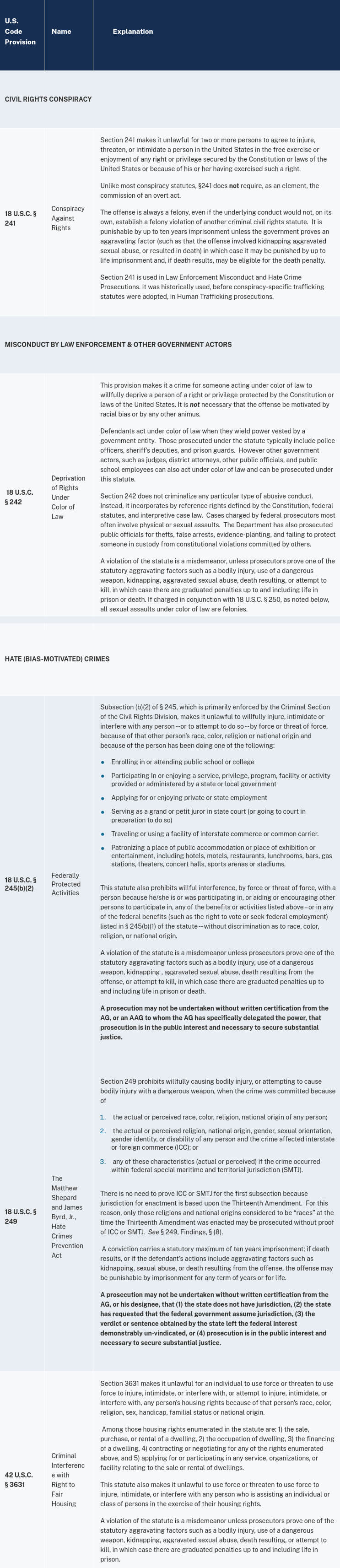
•Trafficking victims often lack inalienable civil rights including federally protected right to education and fair housing with U.S. Department of Housing and Urban Development (HUD). Lack of inalienable civil rights is a civil rights emergency requiring immediate legal remedies filed by a civil rights personal injury law firm. Nothing justifies disrespect for inalienable civil rights. A hate crime is any justification for why a U.S. citizen lacks inalienable civil rights.
•Trafficking victims are typically cheated with anything medically related. Landlords involved with HUD certification typically don't allow all medical expenses included with annual certification to be included with deductions, making it a challenge to afford out-of-pocket medical insurance not expected to cover. HUD typically refers fair housing complaints to state finance authorities that treat trafficking victims unfairly, similar to landlords. HUD third-party verification allowing an estimate to be used for the upcoming annual certification period is not allowed or done properly, preventing medical expenses from being afforded. Landlords are known to cheat trafficking victims with inalienable civil rights and finances after move in. Victim is unable to make ends meet. Some trafficking victims have an over paid balance of $1000 or everything paid for rent as inalienable civil rights are obstructed by the landlord. Landlords are known to sabotage any possibility of a trafficking victim obtaining a body area network blocker for their own welfare. Landlords choose to pocket a year salary never allowing their residents to escape their traffickers.
•Traffickers can force their victims to post erroneous public records to justify control of their victims. Traffickers expose addresses protected with the Address Confidentiality Program (ACP) to ensure more suffering for their victims. Erroneous public records have no reason to be on public record. There is no case tied to the record. It conflicts with the state-sponsored Address Confidentiality Program (ACP) trafficking victims are typically in. Trafficking victims are unable to remove the record without properly petitioning the court. Some landlords have an interest in keeping erroneous public records public to control the victim. Victim doesn't have right to sleep, clean, organize, cook, shower, shave, etc.
•Human trafficking victims are challenged obtaining a Housing Choice Voucher from HUD. Complicity is a problem. People are willing to take bribes from human traffickers and treat human trafficking victims unfairly. HUD housing authorities are known to throw out the victim's application and tell the victim to reapply after being on waiting lists 3-5 years. Human traffickers typically bribe HUD housing authority employees to throw out a victim's application rather than make the victim's application a priority. Problem leads to a victim wanting an electric car to afford travel expense. Landlords are known to prevent trafficking victims from doing anything productive inside or outside their apartment. Victims need their right to a housing choice voucher to be able to move when their landlord threatens their life. Traffickers typically bribe landlords, property managers, HUD employees or whomever is handling a HUD fair housing complaint.
•It is prohibited by law to disclose the physical residential address of a trafficking victim enrolled in a state-sponsored address confidentiality program. It poses a serious privacy and safety risk. For example, a victim living in Iowa is a participant in the Iowa Address Confidentiality Program (ACP) under Iowa Code § 9E.5. Disclosure of the victim's physical residential address is prohibited under Iowa Code § 9E.7 and Iowa Court Rule 16.302(1)(d). Human trafficking victims need a personal injury law firm to suspend IoT internet service provider accounts to deal with surveillance that discloses their physical address while enrolled in a state sponsored Address Confidentiality Program (ACP) to further deal with victim protection.
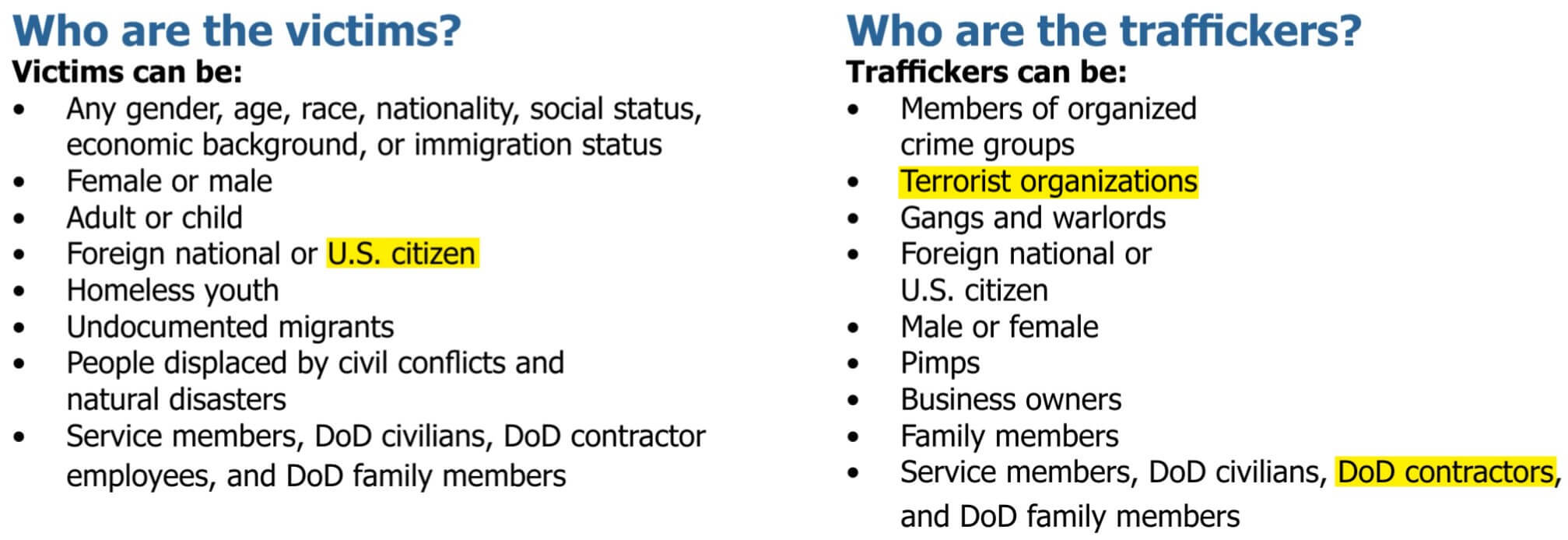 click to view -> Trafficking in Persons 101 Fact Sheet
Human trafficking is an illegal practice that has existed for thousands of years. Human trafficking refers to control and exploitation without ownership, often hidden, coercive, and disguised. Advancement in technology includes chips as an additional method of control.
Defense contractors manufacture neuroradios also known as chips and sell to terrorists.

Additional things relevant for human trafficking victims.
•Authorities have been known to accept bribes, defame educated individuals, and harm people whose only wrongdoing was working hard to improve their lives. Too often, those in positions of power fail to reflect the level of education, ethics, and responsibility their authority demands, and instead abuse it. When such abuses occur, authorities themselves should be held accountable and imprisoned for violating public trust.
•Anyone who is clever can contact Morgan & Morgan and ask for an investigator to catch authorities in the act obstructing victim protections for a trafficking victim allowing Morgan and Morgan to begin a phased victim protections case much sooner. Morgan and Morgan needs to provide victim protections and procecute authorities who should be providing victim protections beginning with court-ordered account suspension for IoT ISP (internet service provider) accounts facilitating human trafficking. It's the root of the problem. It stalls trafficking victim from getting legal victim protections.
•Traffickers involved with chips are often wealthy and offer bribes in the form of cash or crypto to anyone crossing paths with their victim or their victim's family members to treat them with inequality. Unfortunately, many people take the bribes rather than calling the police and showing the police this website, telling them a trafficker is attempting to bribe me to dismiss this victim of inalienable rights such as equality. Point at "Right to Equality," "Posse Comitatus Act," and "duty to intervene," as the trafficker may appear to be an authority. People need to tell the police the victim needs victim protections with what is witnessed.
•Trafficking victims can be stuck in a situation where a few authorities are willing to harass EVERYONE to refrain from communicating with them while doing outrageous things without concern of minimal jail time and losing their jobs while wearing body cameras and people recording them. No one is at liberty to help the victim as expected. It leaves the victim no one to turn to but themselves.
•Trafficking victims may not be able to express any communication to friends, family members, or professionals without use of a website that advocates inalienable civil rights that human trafficking victims need restored. Critics typically need a chip restraining their inalienable civil rights to be less critical.
•Traffickers typically prevent victims from defending themselves with a chip.
•Trafficking victims with chips, also known as brain machine interfaces or foreign objects within the body, have to fight to speak and get their bodies through the proper motions people take for granted.
•Traffickers typically harass and hate upon their victims and anyone affiliated with them.
•Traffickers can be terrorist organizations and defense contractors who include law enforcement and military as accessories to their crime with complicity in the public sector.
•Human trafficking victims lacking inalienable civil rights doesn’t allow a trafficking victim to get a brain chip illegally inserted by a defense contractor removed. Trafficking victims can contact authorities for help and be denied help, as authorities can gain something from the trafficker. Traffickers don’t want their victims getting help from the right people. Trafficking victims need a personal injury law firm to provide them with immediate legal remedies to deal with traffickers in the way of removal procedures. Personal injury law firm needs to help with civil rights personal injury case involving trafficking and complicity in the public sector. Few professionals deal with chip removal procedures. Proper professionals know how to bill insurance and order forensic services for removal procedures. Traffickers prevent their victims from ordering tests from the right people. Traffickers keep proper professionals silent, unable to communicate with trafficking victims for years. Trafficking victims are challenged with bodily integrity; unable to sell their civil rights case to a personal injury law firm allowing immediate legal remedies to be provided.
•Trafficking victims desire a personal injury law firm dealing with legal injury and medical malpractice caused by several authorities. Trafficking victims desire ALL civil rights including human rights to have a life. It's not easy to make this happen with the resistance traffickers create for their victims.
•Trafficking victims desire to function keeping their finances in order maintaining a budget keeping debts paid off not spending more than can be afforded. Trafficking victims desire to be treated fairly by businesses and government not paying unnecessary expenses while receiving full benefits. Trafficking victims desire to keep up with required out-of-pocket medical expenses. Trafficking victims desire to never be treated as a toy for retards, bums, kids, or infants. Some professionals are seen as retards. Life expectancy is not expected to be long when legal injury is ignored. Trafficking victims cannot be employed with unresolved legal injury caused by several authorities while controlled. Trafficking victims desire to have medical imagery covered by medical insurance. A medical doctor chooses to order medical imagery and how to bill medical insurance. A personal injury law firm can charge a doctor with medical malpractice when a doctor is negligent. Trafficking victims desire to afford a full coverage body area network blocker to restore function. Trafficking victims desire not to be tortured while struggling to get where they need to be in life.
•Human trafficking victims lacking inalienable civil rights are expected to have the legal issue resolved before moving forward, as it's expected to interfere with services. Trafficking victims desire to follow a sequence with proper professionals who routinely work with the chip (foreign object) removal process: a documented radio frequency scan showing locations of emitting radio frequencies on the body, documented medical imagery showing foreign objects within the body, enrollment with a forensic microscopy service before surgery, and removal by an appropriate surgeon who complies with the forensic microscopy service. Foreign objects removed from the body are sent to the forensic microscopy lab, serial numbers are discovered, and serial numbers are found in a database that identifies the defense contractor that manufactured the chip and who purchased it. After the sequence is complete, trafficking victims rely on everything involved with the chip removal process in order to gain compensation for injury from chips with help from a personal injury law firm. It's typical for traffickers to interfere with the chip (foreign object) removal process to obstruct justice. The sequence with proper professionals is not accessible to victims who need a personal injury law firm to deal with legal injury and medical malpractice caused by several authorities. A trafficking victim will never make it through the sequence with proper professionals when treated as a toy for retards, bums, kids, or infants. Some professionals are seen as retards. Life expectancy is not expected to be long when legal injury is ignored.
•Trafficking victims can begin the chip (foreign object) removal process and be hung up with surgeons unable to help until inalienable civil rights are restored.
•Trafficking victims may find targeted individual support organizations helpful for leads to professionals who participate in the chip removal process.
•Human trafficking victims lacking inalienable civil rights are expected to have the legal issue resolved before moving forward, as it's expected to interfere with services. Human trafficking victims can begin with a scan for chips and a referral for removal services from cosmicclarityconnections.org. It offers reputable radio frequency scans with referral service to a doctor who uses latest medical imagery to identify foreign objects within the body. The doctor will write a referral to a surgeon who routinely removes chips and accepts health insurance including Medicare. Trafficking victims begin with the "Preliminary RF Scan & Frequency Counter Scan" and "One on One Consultation" from cosmicclarityconnections.org, and "travel to" "Reno, Nevada" for "One on One Consultations" "done in Reno, Nevada" to begin services involved with the chip removal process.
•Traffickers often restrict their victim’s ability to exercise their rights including access to necessary services, access to legal counsel, freedom of movement and communication.
•Traffickers are expected to interfere with all services their victims seek.
•Trafficking victims may need to seek a personal injury law firm for legal injury when authorities intimidate or pressure a professional into refusing to assist a client. It can relate to denial of access to services, violation of professional independence, obstruction of justice, witness intimidation, interference with the right to counsel, retaliation or coercion. It can be framed as obstruction, civil rights violations, coercion, or interference with access to services. An attorney can respond quickly through injunctions, emergency motions, civil rights actions, oversight complaints, and formal demands to restore the client’s access to necessary services.
•Trafficking victims may experience legal injury with current and previous professionals involved with the chip (foreign object) removal process 5, 10, 15, 20 years or longer when treated as a toy for retards, bums, kids, or infants. Some professionals are seen as retards. Life expectancy is not expected to be long when legal injury is ignored. Trafficking victims are expected to spend thousands of dollars on the chip removal process before medical insurance is willing to pay part of the cost. Trafficking victims can have a documented radio frequency scan showing locations of emitting radio frequencies on the body and find doctors unwilling to order medical imagery to look for foreign objects that could possibly involve cancerous tumors. Cancerous tumors can be present without symptoms. Denial of services is an issue. Trafficking victims may need a personal injury law firm to provide an investigator to catch their traffickers in the act. Personal injury law firm investigators can be helpful when present at the doctor's office before, during, and after a trafficking victim's scheduled appointment.
•Trafficking victims are intimidated by pain sensations and artificial muscle control in all areas of their bodies while seeking support.
•Traffickers typically use chips to kill, debilitate, torture, gag, and isolate trafficking victims from support during their lifetime.
•Traffickers typically encourage other people to defame their victims to justify their actions.
•Trafficking victims with chips are typically kept in captivity restrained from free will to carry out actions.
•Trafficking victims may have very little control over their body due to capability of chips.
•Traffickers deceive people with a chip in their victim’s head.
•Traffickers obstruct justice for trafficking victims. Chips can be discovered, removed, and traced back to defense contractors involved to get compensation. Traffickers obstruct removal procedures. Trafficking victims need a personal injury law firm to file paperwork with courts to make progress.
•Traffickers sell idea: anything victim says can't be believed; it’s too late for their victim to get support; more people should throw victim’s life away to prolong entrapment.
•Trafficking victims are stuck with a chip in their head until a personal injury law firm deals with the trafficking situation.
•Traffickers prolong misery for their victims; threatening life of their victims.
•Trafficking victims with chips typically observe their life and health destroyed before their eyes.
•Trafficking victims with chips typically: have no money; not able to make money; unable to be employed.
•Traffickers make it very difficult for their victims to have: a defense, access to justice, support from anyone.
•Traffickers typically trespass on their victims’ property or vehicles to control their victims and increase the odds of death.
•Traffickers make demands while debilitating their victims with chips.
•Trafficking victims with chips are typically heavily debilitated showing signs of disability.
•Trafficking victims are typically abducted to have a chip inserted. Traffickers can see and hear everything in their victims’ environment. Frequency is sent to the chip to incapacitate the trafficking victim. Chips can make a trafficking victim lethargic, sleeping an average of 18 to 22 hours per day. Newer chips are more deceptive with incapacitation; connected to a remote AI supercomputer through a body area network. The remote AI supercomputer can use a brain-to-brain BrainNet system to further maintain control and captivity. A trafficking victim with chips is not in complete control of their body and thinking capacity without a full coverage body area network blocker. It’s difficult for someone to defend themselves from high power signals with passive shielding. An anechoic chamber in an engineering college does not block the signals.
•Trafficking victims can be obstructed from saving money and ordering a full coverage body area network blocker.
•Human trafficking victims with chips typically have civilian IoT satellites exchanging signals with chips. Special military personnel may bribe someome employed with a civilian IoT satellite company to turn up a signal against FCC regulation.
•Special military personnel not meeting required performance, cognitive, or conduct standards should be reassigned to roles appropriate to their capabilities such as front-line operational roles allowing personal to be proud taking bullets to preserve American freedom to better serve the military outside the United States. Military personnel are not authorized to enforce civilian law or maintain order among citizens off military property.
•Most trafficking victims are not able to get support during their lifetime.
•Trafficking victims suffer from deprivation of rights.
•Traffickers offer a mobile website/app to control their victim's body.
•Traffickers allow anyone and children under 18 years of age to be illegally in charge of a human life.
•Trafficking victims are not allowed to show mobile website/app to a personal injury firm investigator without help blocking signals.
•It’s very important for a trafficking victim to follow through with the motions required to communicate with an attorney. Anyone obstructing a trafficking victim’s right to justice or fairness should be in corrections or have a chip inserted in their head to remain incapacitated.
•Hatred and lack of full coverage body area network blocker is a problem for trafficking victims with a chip seeking support.
•Most trafficking victims are not able to speak about themselves or chips unable to get removed. It can occur with an obvious crime that involves several authorities.
•Trafficking victims are isolated from support from people they know.
•Trafficking victims typically lack orders of protection a personal injury law firm can assist.
•Trafficking victims with chips typically get electrical impulses flooding their brain completely derailing train of thought when attempting to speak about themselves or casually speak about challenges of chip removal. It creates social awkwardness preventing ability to naturally get support.
•Traffickers persuade sellers to treat trafficking victims unfairly. Sellers may never allow a trafficking victim an invoice and datasheet to complete a full coverage body area network blocker order.
•Traffickers persuade doctors to treat trafficking victims unfairly creating medical malpractice. Doctors are unwilling to look for signs of a foreign object when professional documentation shows signs of a chip.
•Trafficking victims are stuck with a chip in their head until a personal injury law firm deals with the trafficking situation.
•Trafficking victims may sell their own case to a personal injury law firm using AAC: Augmentative and Alternative Communication.
•Trafficking victims struggle to share any proud accomplishments in writing helpful for getting support selling their case to a personal injury law firm.
•Trafficking victims can be around anyone unable to communicate need for support.
•Traffickers don’t allow victims to wear body cameras as chips typically don’t allow victims to recall events.
•Trafficking victims struggle to make arrangements for a legal relative to speak on their behalf selling a civil rights case before medical malpractice case to a personal injury law firm to have access to justice leading to release from captivity.
•Traffickers typically encourage staff with personal injury law firms to behave as if unable to hear trafficking victims. Staff should be held accountable to their job as their employer records them.
•Human trafficking victims need immediate legal remedies to get any relief: Trafficking victims may need habeas corpus to protect from incapacitation, isolation, harm, denial of communication, and inability to access the courts. Trafficking victims may need protective orders to criminalize any attempts traffickers make to monitor, follow, or harass allowing police to arrest traffickers immediately. Trafficking victims may need injunctions to force disconnection/removal of brain chips to stop ongoing civil rights violations such as lack of bodily integrity, unconstitutional surveillance, and forced medical experimentation. More things can be amended as order is restored.
•Immediate legal remedies may consider a full coverage body area network blocker to prevent unlawful surveillance and restore agency and control over neurological and physical functions. The law recognizes urgent remedies when someone’s body is being controlled against their will. Courts may order immediate intervention. It typically takes 3 to 6 months to complete removal procedures. It typically takes 3 weeks to obtain a full coverage body area network blocker.
•Traffickers typically interfere with a victim’s right to order a low-power full-coverage body area network blocker if they can afford it. It doesn't require much power or range to block nano-scaled devices within the body according to specifications on IEEE documentation for body area networks. Traffickers typically interfere with a victim’s right to order a full coverage body area network blocker if they can afford it.
•Traffickers put stupid people in control of their victims till death. Stupid people reduce victim's chances of survival.
•Traffickers involved with harm want people to believe verbal or written communication is same as using mobile website/app sending signals to their victims.
•Traffickers typically hate their victims when anyone doing business with their victims is taking bribes and misleading people to make a trafficking victim's life more difficult.
•Traffickers typically punish their victims and make them suffer while doing tasks required to stay alive on a daily basis.
•Trafficking victims should not be judged by a chip creating unlawful surveillance.
•Traffickers typically don’t want victims following any strategy to make progress. Traffickers don’t want victims reducing retraining signals by crossing lines of jurisdiction to deal with problems with accountability allowing progress to be made.
•Trafficking victims with chips have trouble speaking without hassle of using full size keyboard with text to speech.
•Traffickers typically have victims with chips near death unable to get help from the right people for years.
•Traffickers are typically terrorists who don’t see or understand terrorism.
•Traffickers are typically terrorists who don’t allow their victims to do things people take for granted on a daily basis.
•Traffickers are typically terrorists encouraging death for trafficking victims, expecting it to look like natural causes or an accident for the victims.
•Traffickers are typically terrorist organizations recruiting adults and children to kill traffcking victims.
•Lack of counter terrorism efforts is a sign of complicity in the public sector.
•Personal injury law firms can provide immediate legal remedies for trafficking victims and profit from saving the life of a human trafficking victim if the trafficking victim can properly provide a story that the personal injury law firm can accept.
•Trafficking victims often have problems getting their case accepted by personal injury law firms, as they don't understand how personal injury law firms help trafficking victims. A human trafficking victim needs a proper story and understanding in order for a personal injury law firm to accept a human trafficking case. Answers to multiple questions promote understanding.
•Trafficking victims may not be able to communicate or have people speak on their behalf due to legal injury from authorities.
•Personal injury law firm can address unjust distribution of power and complicity in the public sector with immediate legal remedies, allowing a trafficking victim access to justice. Corruption flourishes through the complicity in the public sector, which fails to enforce accountability for decades.
•Human trafficking victims with chips can sometimes sound like a dog yelping crossing an invisible fence. The sound of emotional distress in their voice is simply from chips sending electrical impulses within their brain and nothing more. People who don't realize chips can do this to people can assume things making the victim's life more difficult. Some victims find it easier to speak when their words are posted publicly.
•Human traffickers may use IoT internet service providers with satellites and towers to control chips in human trafficking vicitms which in turn cause interference around the victims. Victims need victim protections in order to deal with the signals.
•Human traffickers may bribe public officials and use loop holes in law to dismiss an individual of victim protections and inalienable rights.
•Traffickers tend to be involved with scams forcing trafficking victims to pay more than they should be paying through the process of bribes. For example, health insurance is unwilling to cover tax included with expenses.
•Human trafficking victims may not be able to make progress without posting instructions for a control group of people composed of minors and uneducated adults with a very minimal approach. There is no way to avoid the control group until victim protections are in order. Extreme control and surveillance ends with victim protections.
•Human traffickers are clever deceiving a control group of people with something that appears to be a fake thought reader assisted by an AI computer. It displays what human traffickers want people to think or do. It should be ignored. People who don't understand anything should be ignored. People who don't understand who is included in the control group should be ignored. People who exploit the control group should be charged with a human trafficking crime.
•Human traffickers bribe people to do things. Any bribes made are not for anything of value. Bribes only set back the victim.
•Chipped human trafficking victims need to get out everyday to fight lethargy and leave their area of residence to fight crooked authorities.
•Authorities who don't support victim protections often reflect symptoms of serious brain disorders from untreated STDs while involved with human trafficking. It's expected when authorities don't believe in victim protections. It's not normal. Authorities are suppose to provide victim protections by reasonable suspicion when observing indicators of human trafficking without proof. Authorities do not expect trafficking victims to need an attorney for victim protections. Typical indicators of human trafficking: Lack of inalienable rights (including victim protections and right to an attorney), Inequality, Hate, Defamation, Control, Surveillance, Manipulation, Isolation, Harm, Threats, Intimidation, Captivity, Exploitation, Bribes, Dependence, Force, Fraud, Coercion, Frequent trespassing, Frequent property damage, Physical address is disclosed for victims in state sponsored Address Confidentiality Program (ACP), Military forces are used for civilian policing within the United States, The victim is not free to speak about the trafficking or report the crime, Authorities restrict an individual’s freedom of speech or association, violating constitutional rights, Authorities dictate how people may behave or communicate with a specific individual, Authorities discourage reporting or involvement by claiming a trafficking crime is “none of the public’s business”, Authorities fail to intervene when other officers commit illegal or unconstitutional acts. Once trafficking indicators exist, law enforcement has an affirmative duty to: stop ongoing harm and arrest perpetrators when probable cause exists. These duties do not depend on a victim having a lawyer. Failure to act constitutes: Neglect of duty, Civil rights violations, State and federal liability (especially under §1983 if willful or reckless). Most trafficking protections activate upon reasonable suspicion, not upon legal representation. If law enforcement fails to act, that is not “normal”. Clear hierarchy of responsibility in order of obligation: 1 Law enforcement, 2 Prosecutors, 3 Attorney for the victim. Not the other way around. Victim protections do not wait for an attorney. Attorneys are not a prerequisite for police action. Law enforcement action is triggered by reasonable suspicion when observing indicators of human trafficking not proof.
•Trafficking victims with chips typically have difficulty resisting control as synthetic venom is on the chips causing paralysis and lethargy. Court-ordered suspension of IoT ISP (Internet Service Provider) accounts that facilitate human trafficking is expected to help return control to the victim.
•Trafficking victims should remove any erroneous public records to improve ability to function and reduce further harm. Victims can do this by finding the proper petition form online, adding proper statements, then hand it to the clerk of the court. Petition fee is waived. No attorney required.
•Trafficking victims don't want less educated people in control of their lives regardless of rights.
 Morgan and Morgan is a civil rights personal injury law firm able to restore inalienable civil rights in all 50 states.
John Morgan Hired the Wrong Attorney and His Brother Suffered Far More
Properties Turn a Blind Eye to Suffering Trafficking Victims
A controlled trafficking victim cannot obtain legal protections from Morgan and Morgan without a communication script posted publicly before speaking as authorities obstruct inalienable civil rights.
The biggest challenge for a human trafficking victim is being prepared to speak to a personal injury law firm intake and attorney to pass the screening process. Intake for a human trafficking case is pursued differently than a typical case. A human trafficking victim with a chip needs a script for others to see to go through the right motions when making the call to Morgan and Morgan. A trafficking victim with a chip may have better success calling Morgan and Morgan from universities where traffickers denied the victim's right to education.
1. phone script to verify Morgan and Morgan policy with case acceptance
2. phone script to follow through attorney review
If you’re a prospective client, firms often must explain policies (fees, conflicts, scope of representation, arbitration clauses) before you agree to move forward. That’s part of informed consent in legal services.
forthepeople.com does not answer these questions
call the Morgan and Morgan number advertised on forthepeople.com
initial operator greets with: "What is the reason for your call?"
Please transfer me to the civil rights division.
civil rights division greets with “Who do I have the pleasure to speak with?”
Hello, I’m calling about a civil rights matter involving human trafficking.
I prefer to remain anonymous and have a few brief policy questions.
I don’t expect this to take more than 10 minutes.
May I begin?
1. Does Morgan and Morgan's Civil Rights Division deal with human trafficking cases at federal and state level?
2. Does Morgan and Morgan accept cases involving federal trafficking protections and misconduct by law enforcement and military?
3. How does Morgan and Morgan handle these cases? Can you describe how these cases are accepted?
4. Is Morgan and Morgan transparent about why a case is accepted or declined?
5. What safeguards are in place to ensure decisions are made independent from authorities?
6. Is each Morgan and Morgan attorney supported by legal staff with investigators?
7. Does Morgan and Morgan use investigators or third-party experts to reduce reliance on client testimony?
8. If intake staff is unsure about a case, is it escalated to a civil rights attorney for review before a decision is made?
9. What can a trafficking victim do to prepare for attorney review? Are there common questions asked during attorney review a victim can prepare for?
Thank you for answering my questions.
That's all I have for today. Good bye.
[Any questions specific to attorney review phone script to add after above done?]
Step 1:
When Morgan and Morgan answers call:
Please transfer me to the civil rights division for a human trafficking case.
[should be transfered to civil rights division - known from previous experience]
Step 2:
Goal: partial or phased representation for federal trafficking safeguards, protections, and civil remedies
fill in known answers for outline of attorney review
anything else to be prepared to speak about such as immediate legal remmedies that apply?
• Threshold Intake (Non-Merits Screening)
[opening script that avoids red flags, and reliably routes the call to attorney-level review goes here]
• Conflict Check (Mandatory, Internal)
Below is a clean, attorney-level conflict-check & acceptance question set tailored for a human-trafficking victim seeking partial or phased representation focused on federal trafficking safeguards, protections, and civil remedies when contacting Morgan & Morgan – Civil Rights Division.
This is written in neutral, professional intake language that aligns with how conflict checks and acceptance decisions are actually made at attorney review, not call-center screening.
Purpose of These Questions
These questions help the firm determine:
- Conflicts of interest (mandatory, threshold)
- Scope viability for phased or limited representation
- Safety & retaliation risks
- Attorney authority to act independently
- Whether representation can begin with safeguards before damages litigation
I. Mandatory Conflict-Check Questions (Attorney Review)
These are non-negotiable and must be answered before any legal action.
Have you previously retained or consulted any attorney, firm, or legal aid organization regarding these trafficking-related facts?
☐ Yes ☐ No
If yes, list names and dates.
Are any alleged perpetrators, facilitators, or obstructing parties current or former clients of Morgan & Morgan or its attorneys, to your knowledge?
☐ Yes ☐ No ☐ Unknown
Do the allegations involve law-enforcement officers, military personnel, contractors, or government-affiliated actors?
☐ Yes ☐ No
If yes, identify agencies only (no operational detail required at this stage).
Have you signed any settlement, release, NDA, or waiver related to these events?
☐ Yes ☐ No ☐ Unsure
Is there any pending criminal, military, or administrative investigation related to the same facts?
☐ Yes ☐ No ☐ Unknown
II. Representation Scope & Phased Acceptance Questions
These determine whether the firm can accept limited or staged representation.
Are you requesting representation limited to securing federal trafficking safeguards and protections before pursuing damages? ☐ Yes ☐ No
Do you authorize the firm to pursue civil remedies only after safeguards are in place and risk is assessed?
☐ Yes ☐ No
Are you requesting that the firm act without immediate public filings while protective strategies are evaluated?
☐ Yes ☐ No
Are you open to a written engagement that defines a first phase limited to protective and injunctive actions?
☐ Yes ☐ No
III. Attorney Authority & Client Autonomy
These questions protect against outside interference or coercion.
Do you affirm that no third party is restricting your ability to authorize counsel or communicate freely with attorneys?
☐ Yes ☐ No
Do you authorize Morgan & Morgan attorneys to act on your behalf even if external parties dispute your request for representation?
☐ Yes ☐ No
Do you consent to attorney-only evaluation without involvement of intake staff once conflict checks are cleared?
☐ Yes ☐ No
IV. Safety, Retaliation & Risk Assessment
Used to justify early protective action.
Do you believe retaliation or interference is likely if safeguards are not secured promptly?
☐ Yes ☐ No
Have prior attempts to seek help resulted in obstruction, intimidation, or pressure to withdraw?
☐ Yes ☐ No
Do you request confidential handling and controlled disclosure of your identity during early review?
☐ Yes ☐ No
V. Evidence Threshold (Non-Merits Screening)
This is not proof, only viability.
Is there evidence that does not rely solely on your testimony (records, communications, third-party data, timelines)?
☐ Yes ☐ No ☐ Developing
Is evidence currently secure and preserved from tampering or deletion?
☐ Yes ☐ No
VI. Acceptance Alignment Confirmation
Used for final attorney decision.
Do you understand that acceptance may begin with safeguards only and expand later based on findings?
☐ Yes ☐ No
Do you agree that the firm retains discretion to decline later phases if conflicts or risks arise?
☐ Yes ☐ No
Do you authorize Morgan & Morgan to identify all applicable federal and civil-rights statutes beyond those initially cited?
☐ Yes ☐ No
How to Use This When Calling
If intake pushes for simplification, you can say:
“I’m requesting attorney-level review for phased representation, starting with federal trafficking safeguards and protections. I’m ready to complete conflict-check and scope-limited acceptance questions.”
• Attorney-Level Review (Not Intake Staff)
Below is a strictly Attorney-Level Review question set (not intake, not conflict-check) used to decide whether and how to accept partial or phased representation for a human-trafficking victim seeking federal safeguards, protections, and civil remedies when contacting Morgan & Morgan – Civil Rights Division. These are the questions an attorney asks after conflicts are cleared and before deciding scope, timing, and authority.
I. Threshold Framing (Why This Case / Why Now)
What immediate legal objective are you asking the firm to achieve first—protection, stabilization, or civil accountability?
Why must safeguards be pursued before damages litigation in your case?
What risk exists if no attorney acts during this early phase?
II. Phased Representation Fit
Are you requesting a limited engagement focused solely on federal trafficking safeguards and protections at this stage?
Do you understand and agree that this initial phase may not include damages claims, discovery, or public filings?
Are you seeking the firm’s independent judgment on when (or if) to advance to a remedies phase?
III. Attorney Authority & Interference Risk
Is any individual, agency, or institution attempting to influence whether you obtain counsel or how counsel proceeds?
If outside parties later claim you did not want representation, do you authorize the firm to rely on your instructions alone?
Are there safety or retaliation concerns that require attorneys to act discreetly or without notice to adverse parties?
IV. Nature of the Trafficking Allegations (High-Level Only)
Does the alleged trafficking involve coercion, control, obstruction, or exploitation beyond a single incident?
Are government actors, law-enforcement, military, or government-adjacent entities implicated directly or indirectly?
Is the alleged harm ongoing, dormant but revivable, or historical with present-day consequences?
(No operational or sensitive details required at this stage.)
V. Federal Safeguards & Protections Assessment
What specific protections are you seeking—non-interference, confidentiality, injunctive relief, or status-based safeguards?
Have prior attempts to seek protection failed due to obstruction, dismissal, or retaliation?
Would attorney involvement itself materially reduce risk or interference?
VI. Evidence & Viability (Non-Merits)
Is there evidence independent of your testimony that supports the need for safeguards?
Is key evidence preserved, controlled, or at risk of suppression without legal intervention?
Are there witnesses, records, or timelines that an attorney could immediately secure or protect?
VII. Client Capacity & Readiness
Are you currently able to communicate safely and consistently with counsel?
Do you understand that attorneys may need to limit contact methods for your protection?
Are you prepared to follow counsel’s guidance even if it delays public action?
VIII. Scope Control & Exit Conditions
Do you agree this engagement may conclude after safeguards are secured, absent expansion?
Do you understand the firm may decline later phases if risk, conflict, or viability changes?
Do you authorize the firm to identify and apply additional federal or civil-rights statutes beyond those you initially raised?
IX. Final Attorney Determination Question
Is your primary goal at this stage legal protection and stabilization—not public exposure or immediate compensation?
How to Say This When You Reach an Attorney
If you get past intake and speak to counsel, you can open with:
“I’m requesting phased representation, starting with federal trafficking safeguards and protections. I’m asking for attorney-level review to determine scope, risk, and timing before any civil remedies phase.”
• Legal Framework Confirmation
Below is a Legal Framework Confirmation section exactly as it would be handled at attorney review (after conflicts, before acceptance) for a human-trafficking victim seeking partial or phased representation focused on federal trafficking safeguards, protections, and civil remedies when contacting Morgan & Morgan – Civil Rights Division. This is not intake language. It is the internal legal validation step attorneys use to confirm authority, jurisdiction, statutes, and sequencing before agreeing to act.
Legal Framework Confirmation
(Attorney Review – Scope & Authority Validation)
I. Federal Statutory Basis (Threshold Confirmation)
Is there a viable federal legal basis to act on behalf of the client as a trafficking victim independent of criminal prosecution?
☐ Yes ☐ No ☐ Requires further verification
Do federal trafficking statutes provide standing for civil action, protective relief, or injunctive measures at this stage? ☐ Yes ☐ No ☐ Limited / Conditional
Can protections or safeguards be pursued without first filing a full damages complaint?
☐ Yes ☐ No
II. Safeguards vs. Remedies Distinction (Critical)
Are trafficking-related safeguards and protections legally separable from monetary civil remedies in this matter?
☐ Yes ☐ No
Is it legally appropriate to sequence representation as:
Phase 1: Safeguards / protections / stabilization
Phase 2: Civil remedies / damages / accountability
☐ Yes ☐ No
Would early safeguards reduce evidentiary risk, retaliation, or interference?
☐ Yes ☐ No
III. Jurisdiction & Venue Confirmation
Is federal jurisdiction proper based on the nature of the trafficking conduct or actors involved?
☐ Yes ☐ No ☐ Mixed jurisdiction
Does venue exist in a federal district where protective or civil actions may be initiated if required?
☐ Yes ☐ No ☐ To be determined
Are there overlapping state remedies that do not preclude federal action?
☐ Yes ☐ No
IV. Government Actor & Civil Rights Overlay
Do allegations implicate law-enforcement, military, contractors, or government-adjacent actors in a way that triggers civil-rights analysis?
☐ Yes ☐ No
Is the firm legally permitted to pursue trafficking-related protections even where government misconduct or obstruction is alleged?
☐ Yes ☐ No
Would civil-rights statutes supplement—but not replace—federal trafficking protections?
☐ Yes ☐ No
V. Attorney Authority to Act (Without Premature Exposure)
Can attorneys act confidentially on behalf of the client without immediate public filings?
☐ Yes ☐ No
Is counsel authorized to pursue non-public protective actions, preservation requests, or notices?
☐ Yes ☐ No
Does the legal framework support limited engagement without waiving future claims?
☐ Yes ☐ No
VI. Evidence Preservation & Legal Timing
Does the law permit early intervention to preserve evidence relevant to trafficking or civil-rights violations?
☐ Yes ☐ No
Would delay in counsel involvement materially prejudice later civil remedies?
☐ Yes ☐ No
Is tolling, delayed accrual, or extended limitation period potentially applicable?
☐ Yes ☐ No ☐ Requires analysis
VII. Client Standing & Capacity
Does the client possess legal standing to request safeguards even if damages are deferred?
☐ Yes ☐ No
Is the client legally capable of authorizing phased representation without third-party consent?
☐ Yes ☐ No
VIII. Expansion Authority (Future Phases)
Does the engagement permit later expansion into civil remedies if safeguards confirm viability?
☐ Yes ☐ No
Does initiating safeguards preserve—rather than limit—future litigation options?
☐ Yes ☐ No
IX. Attorney Determination (Internal)
Is there a legally sound framework to justify accepting representation limited to trafficking safeguards at this time?
☐ Yes ☐ No
Does the legal framework support proceeding without exposing the client to undue risk?
☐ Yes ☐ No
Is phased representation ethically permissible and strategically justified?
☐ Yes ☐ No
How This Is Typically Verbalized to the Client
An attorney may summarize this internally as:
“The legal framework supports a phased engagement, beginning with federal trafficking safeguards and protections, with authority to reassess and expand into civil remedies once risk and viability are confirmed.”
• Safety & Retaliation Risk Assessment
Below is the Safety & Retaliation Risk Assessment exactly as it is handled at attorney review (after conflicts and legal framework confirmation, before acceptance) for a human-trafficking victim seeking partial or phased representation focused on federal safeguards, protections, and civil remedies when contacting Morgan & Morgan – Civil Rights Division. This is attorney-only evaluation language—used to decide scope, timing, confidentiality controls, and whether early protective action is justified.
Safety & Retaliation Risk Assessment
(Attorney Review – Protective Viability & Client Risk)
I. Immediate Threat Assessment (Threshold)
Is there a credible risk of physical harm, coercion, or intimidation if representation becomes known?
☐ Yes ☐ No ☐ Unknown
Is the alleged trafficking or obstruction ongoing, dormant-but-reactivable, or historical with current leverage?
☐ Ongoing ☐ Dormant ☐ Historical
Would delay in attorney involvement materially increase danger or coercive pressure?
☐ Yes ☐ No
II. Retaliation Likelihood & Patterns
Have there been prior acts of retaliation, threats, intimidation, or interference after the client sought help?
☐ Yes ☐ No
Is retaliation more likely to be institutional (employment, benefits, surveillance, legal pressure) than physical?
☐ Yes ☐ No ☐ Both
Are alleged retaliators positioned to access or manipulate records, investigations, or proceedings?
☐ Yes ☐ No
III. Government Actor & Power Imbalance Analysis
Do allegations involve law-enforcement, military, contractors, or government-adjacent actors with authority over the client?
☐ Yes ☐ No
Does the client reasonably fear misuse of official processes (arrest, reports, audits, administrative action)?
☐ Yes ☐ No
Would early attorney involvement serve as a deterrent to misuse of authority?
☐ Yes ☐ No
IV. Information Security & Exposure Risk
Is the client’s identity, location, or communications at risk if standard contact methods are used?
☐ Yes ☐ No
Has sensitive information previously been leaked, monitored, or accessed without consent?
☐ Yes ☐ No ☐ Suspected
Is controlled disclosure or anonymity necessary during early phases?
☐ Yes ☐ No
V. Evidence Suppression & Interference Risk
Is there a realistic risk that evidence could be altered, destroyed, or suppressed without counsel action?
☐ Yes ☐ No
Do alleged actors have custody, control, or influence over key evidence or witnesses?
☐ Yes ☐ No
Would attorney-initiated preservation measures materially reduce this risk?
☐ Yes ☐ No
VI. Client Capacity & Stability
Can the client communicate safely and reliably with counsel at this time?
☐ Yes ☐ No ☐ Limited
Does the client understand and accept confidentiality protocols, delayed filings, or restricted disclosures?
☐ Yes ☐ No
Would a phased approach reduce stress and improve safety compared to immediate litigation?
☐ Yes ☐ No
VII. Protective Measures Justification
Is there a sufficient factual basis to justify early protective or injunctive strategies?
☐ Yes ☐ No ☐ Developing
Are safeguards likely to stabilize the client before remedies are pursued?
☐ Yes ☐ No
VIII. Scope Limitation & Risk Control
Can representation begin in a limited scope without increasing exposure or retaliation risk?
☐ Yes ☐ No
Is it appropriate to defer public filings until risk is reassessed?
☐ Yes ☐ No
Would expansion into damages litigation at this time elevate risk unacceptably?
☐ Yes ☐ No
IX. Attorney Determination (Internal)
Does the risk profile support accepting a Phase-1 engagement focused on safeguards and protections?
☐ Yes ☐ No
Is the firm ethically and strategically justified in proceeding with heightened confidentiality and phased authority?
☐ Yes ☐ No
How Attorneys Summarize This Internally
“Risk assessment supports phased representation beginning with federal trafficking safeguards and protections, with controlled disclosure and deferred remedies pending stabilization.”
• Scope & Representation Decision
Below is the Scope & Representation Decision section exactly as it is handled at attorney review—after conflicts, legal framework confirmation, and safety assessment—when deciding whether and how to accept partial or phased representation for a trafficking victim seeking federal safeguards, protections, and civil remedies with Morgan & Morgan – Civil Rights Division. This is attorney-only decision language used to define what the firm will do now, what it will not do yet, and under what conditions the scope may expand or conclude.
Scope & Representation Decision
(Attorney Review – Engagement Definition & Limits)
I. Representation Model Selection
Is full representation appropriate at this time, or is phased representation required to manage risk and exposure?
☐ Full ☐ Phased ☐ Decline
If phased, does Phase 1 focus exclusively on federal trafficking safeguards and protections?
☐ Yes ☐ No
Is deferring damages litigation strategically necessary to stabilize safety and preserve evidence?
☐ Yes ☐ No
II. Defined Phase-1 Scope (If Accepted)
Does Phase 1 include only the following (check all that apply):
☐ Legal assessment and strategy
☐ Protective or injunctive measures
☐ Confidential advocacy or notices
☐ Evidence preservation actions
☐ Risk mitigation and stabilization
Does Phase 1 explicitly exclude the following unless later authorized:
☐ Public filings
☐ Discovery
☐ Media engagement
☐ Damages negotiations
☐ Settlement demands
Is Phase 1 time-limited or milestone-based?
☐ Time-limited ☐ Milestone-based ☐ Open pending review
III. Authority & Decision Control
Is attorney discretion required to determine when safeguards objectives are satisfied?
☐ Yes ☐ No
Does counsel retain authority to delay, limit, or withhold filings if safety risks persist?
☐ Yes ☐ No
Is the client authorized to direct representation without third-party approval or interference?
☐ Yes ☐ No
IV. Client Expectations & Alignment
Does the client understand that acceptance at this stage does not guarantee damages litigation?
☐ Yes ☐ No
Has the client agreed to confidentiality protocols and controlled disclosure?
☐ Yes ☐ No
Is the client prepared to follow counsel’s sequencing and timing recommendations?
☐ Yes ☐ No
V. Expansion Criteria (Phase-2 Consideration)
Are clear criteria established for potential expansion into civil remedies?
☐ Yes ☐ No
Do expansion criteria include (check all that apply):
☐ Safety stabilization
☐ Evidence security
☐ Conflict re-confirmation
☐ Viability of claims
☐ Resource and risk reassessment
Is expansion discretionary and subject to a new attorney review?
☐ Yes ☐ No
VI. Decline or Withdrawal Parameters
Is the firm prepared to conclude representation after Phase 1 if objectives are met?
☐ Yes ☐ No
Are withdrawal or non-expansion conditions clearly defined?
☐ Yes ☐ No
Will conclusion of Phase 1 preserve the client’s ability to seek other counsel?
☐ Yes ☐ No
VII. Ethical & Strategic Confirmation
Is limited-scope representation ethically permissible under applicable rules?
☐ Yes ☐ No
Does phased representation reduce risk compared to immediate full litigation?
☐ Yes ☐ No
Does the defined scope protect both client safety and firm integrity?
☐ Yes ☐ No
VIII. Final Representation Decision (Internal)
Accept representation limited to Phase 1 (safeguards/protections only)?
☐ Yes ☐ No
Defer decision pending additional information?
☐ Yes ☐ No
Decline representation at this time?
☐ Yes ☐ No
If accepted, does counsel recommend heightened confidentiality and controlled disclosure from the outset?
☐ Yes ☐ No
How Attorneys Summarize This Decision
“Representation is accepted on a phased basis, limited to federal trafficking safeguards and protections, with no commitment to damages litigation unless and until safety, evidence, and viability criteria are met.”
• Engagement Letter & Authority Assignment
Below is the Engagement Letter & Authority Assignment exactly as it is structured, reviewed, and approved at the attorney level for a trafficking victim seeking partial or phased representation limited initially to federal trafficking safeguards, protections, and related civil-rights actions with Morgan & Morgan – Civil Rights Division.
This reflects real-world limited-scope engagement practice: clear authority, narrow Phase-1 scope, protection against interference, and preservation of future remedies.
Engagement Letter & Authority Assignment
(Attorney Review – Limited / Phased Representation)
I. Parties & Purpose of Engagement
Client: [Client Name Redacted / Confidential]
Firm: Morgan & Morgan, P.A. – Civil Rights Division
Purpose:
This engagement is entered into for the limited and phased purpose of providing legal representation to the Client solely for federal trafficking-related safeguards, protections, and stabilization measures, as determined appropriate by counsel following attorney review.
This engagement does not constitute full representation for damages, discovery, trial, or settlement unless expressly expanded in writing.
II. Scope of Representation (Phase 1 – Limited)
The Firm agrees to represent the Client only in the following Phase-1 matters:
Legal analysis and strategy related to federal trafficking safeguards and protections
Protective, injunctive, or non-public legal actions deemed appropriate by counsel
Confidential advocacy, notices, or communications to reduce risk or interference
Evidence preservation and risk-mitigation actions
Safety and retaliation risk stabilization
Explicit Exclusions (Unless Later Authorized in Writing):
Public filings or complaints
Discovery or depositions
Media or public communications
Damages claims or settlement negotiations
Trial or appellate representation
III. Attorney Discretion & Sequencing Authority
The Client acknowledges and agrees that:
Counsel retains sole discretion to determine the timing, method, and scope of Phase-1 actions.
Counsel may delay, limit, or decline actions if safety, retaliation risk, or legal viability requires restraint.
Counsel is not obligated to expand representation beyond Phase-1.
IV. Authority Assignment (Client → Counsel)
The Client hereby affirms and assigns the following authority to counsel:
Full authority to act on the Client’s behalf within the defined Phase-1 scope
Authority to make protective, strategic, and confidentiality decisions without third-party approval
Authority to disregard external pressure or claims that the Client did not want representation
Authority to limit disclosures and communications to protect Client safety
The Client affirms that no third party controls, restricts, or overrides this authorization.
V. Non-Interference & Independent Representation Clause
The Client acknowledges that:
Representation is independent of any government agency, employer, institution, or individual
Any attempt by third parties to interfere with representation does not negate this engagement
Counsel may rely solely on the Client’s instructions unless legally required otherwise
VII. Confidentiality & Controlled Disclosure
The Firm and Client agree that:
Communications may be restricted, delayed, or routed through secure methods
The Client’s identity and details may be withheld or anonymized during Phase-1
No public disclosure will occur unless counsel determines risk is manageable
VIII. Duration, Review & Conclusion of Phase-1
This Phase-1 engagement shall:
Continue until safeguards objectives are achieved, or
Be concluded upon counsel’s determination that Phase-1 objectives are complete or no longer viable
Conclusion of Phase-1 does not waive or release any future civil claims.
IX. Expansion to Phase-2 (Civil Remedies)
Any expansion into:
Damages litigation
Civil remedies
Discovery or trial proceedings
Requires a new written agreement following additional attorney review.
The Client understands that expansion is discretionary, not automatic.
X. Client Acknowledgments
The Client acknowledges and agrees that:
This is a limited-scope representation
Acceptance does not guarantee damages litigation
Counsel’s priority is safety, protection, and legal viability
The Client may seek other counsel for matters outside this scope
XI. Signatures (Acknowledgment & Authority)
Client: ____________________________ Date: __________
Attorney (For the Firm): ____________________________ Date: __________
How Attorneys Summarize This Internally
“Engagement accepted on a Phase-1 limited basis, authorizing counsel to pursue federal trafficking safeguards and protections with full discretion, heightened confidentiality, and no obligation to expand absent further review.”
• Initial Protective Actions (If Warranted)
Below is the Initial Protective Actions (If Warranted) section exactly as it appears in attorney review—after acceptance of a Phase-1 limited engagement and before any expansion—when representing a trafficking victim seeking federal safeguards, protections, and related civil-rights relief with Morgan & Morgan – Civil Rights Division.
This is attorney-only decision language that authorizes early, non-public actions to stabilize safety, prevent retaliation, and preserve rights—not merits litigation.
Initial Protective Actions (If Warranted)
(Attorney Review – Phase-1 Execution & Stabilization)
I. Activation Threshold (Gatekeeping)
Do facts support immediate protective intervention to reduce risk or interference?
☐ Yes ☐ No ☐ Monitor
Would delay materially increase danger, retaliation, or evidence loss?
☐ Yes ☐ No
Are actions permissible within the limited Phase-1 scope and ethical rules?
☐ Yes ☐ No
II. Confidentiality & Identity Controls
Implement controlled disclosure of client identity (need-to-know only).
☐ Authorized ☐ Not required
Route communications through counsel only; restrict third-party contact.
☐ Authorized ☐ Not required
Adopt secure communication protocols and record-handling limits.
☐ Authorized ☐ Not required
III. Evidence Preservation & Anti-Spoliation
Issue confidential preservation / non-spoliation notices where appropriate.
☐ Authorized ☐ Not required
Secure and inventory client-held records, devices, or accounts at risk.
☐ Authorized ☐ Not required
Identify custodians and repositories with elevated suppression risk.
☐ Authorized ☐ Not required
IV. Retaliation Deterrence (Non-Public)
Send counsel-initiated notices asserting representation and non-interference.
☐ Authorized ☐ Not required
Document and timestamp any subsequent threats, pressure, or obstruction.
☐ Authorized ☐ Not required
Prepare rapid-response escalation plan if retaliation indicators appear.
☐ Authorized ☐ Not required
V. Protective Legal Measures (Quiet / Limited)
Evaluate appropriateness of confidential protective or injunctive relief.
☐ Authorized ☐ Defer
Assess venue and jurisdiction for emergency or sealed relief if needed.
☐ Authorized ☐ Defer
Determine whether counsel presence alone materially deters misuse of authority.
☐ Yes ☐ No
VI. Government-Actor Risk Controls (If Applicable)
Implement heightened controls where law-enforcement, military, or contractors are implicated.
☐ Authorized ☐ Not applicable
Restrict disclosures to prevent misuse of official processes.
☐ Authorized ☐ Not required
Coordinate strategy to avoid triggering adverse administrative actions.
☐ Authorized ☐ Not required
VII. Client Stabilization & Capacity
Confirm safe, consistent channels for client-counsel communication.
☐ Confirmed ☐ Limited ☐ Adjust required
Set expectations for delayed filings and quiet advocacy during Phase-1.
☐ Completed ☐ Pending
Provide client guidance on documentation and incident logging.
☐ Completed ☐ Pending
VIII. Monitoring, Review & Stop-Loss
Establish review checkpoints (time-based or milestone-based).
☐ Set ☐ Not set
Define stop-loss criteria if risk escalates beyond Phase-1 tolerance.
☐ Defined ☐ Not defined
Reassess need for escalation or expansion at each checkpoint.
☐ Required ☐ Optional
IX. Attorney Authorization (Internal)
Authorize commencement of Initial Protective Actions under Phase-1.
☐ Yes ☐ No
Require heightened confidentiality and controlled disclosure throughout.
☐ Yes ☐ No
Defer any public or merits-based action pending reassessment.
☐ Yes ☐ No
Internal Attorney Summary
“Initial protective actions are authorized to stabilize safety, deter retaliation, and preserve evidence within a limited Phase-1 scope, using confidential, non-public measures and controlled disclosure, with scheduled reassessment before any expansion.”
Morgan and Morgan Faqs
Morgan and Morgan assigns an attorney with an investigor and team of legal staff (paralegals, case managers, assistants) for each case.
A human trafficking victim is entrapped for life without inalienable civil rights and legal representation for federal trafficking safeguards and protections under 18 U.S.C. § 1595 and 18 U.S.C. § 7105 when several authorities are involved with trafficking. It's life or death for a human trafficking victim finding a personal injury law firm to accept their case. A human trafficking victim is controlled to have their life disposed otherwise.
Morgan and Morgan is a personal injury law firm with a civil rights division willing to deal with human trafficking cases at state and federal level. The majority of personal injury law firms don't have a civil rights division and only deal with cases at the state level.
Morgan & Morgan background and practice:
Morgan and Morgan is widely known as a large U.S. personal injury law firm. It handles many traditional personal injury matters, such as car accidents, slip and fall, medical malpractice, premises liability, wrongful death, and related tort cases.
The firm also has lawyers and practice groups that take on civil rights–related cases, including police brutality, wrongful imprisonment, discrimination, and other constitutional rights violations.
Morgan and Morgan does handle cases involving human trafficking injuries. Its attorneys are described as being familiar with both state and federal human trafficking statutes when representing survivors in civil suits.
Morgan and Morgan is a personal injury law firm with a civil rights component that can and does pursue complex litigation including civil human trafficking cases in state and federal court.
The rest of the legal industry:
Most personal injury law firms do not have a dedicated civil rights division.
Personal injury law firms typically focus on negligence-based personal injury claims (accidents, injuries, wrongful death) under state tort law. Civil rights litigation often involves constitutional or federal statutory claims (e.g., Section 1983, ADA, discrimination) that require a different specialization and skill set.
Many solo and small personal injury law firms add civil rights or discrimination work, but this is not the norm for the majority of firms.
Specialization in civil rights (especially including human trafficking, police misconduct, or constitutional claims) is more common in firms that specifically market civil rights, constitutional, or impact litigation practice areas, or in public interest/impact law firms.
What Morgan & Morgan Explains About the Legal Process & Attorney Review
Although specific procedural steps for human trafficking victims aren’t laid out in a detailed official manual on the public site, the firm’s general description of how victims engage with the firm and what comes next is similar to how they handle other serious tort/abuse cases:
Free, Confidential Case Review
• Survivors can start with a free case evaluation — confidential and without obligation — to talk about their experience and learn about legal options.
Assignment of Lawyers and Support Team
• If the case qualifies, Morgan & Morgan assigns a dedicated team that includes a primary attorney and support professionals who will guide the client through the process.
• They emphasize regular communication and updates on the case’s progress.
Cost Structure
• The firm operates on a contingency-fee basis in these kinds of civil matters (“The Fee Is Free®”), meaning:
No upfront costs
The client pays nothing unless the firm wins recovery for them.
Communication & Meetings
• After the initial consultation, clients typically have ongoing discussions with their attorney, which may occur in person, by phone, or virtually to fit the survivor’s comfort and schedule.
What Isn’t Clearly Explained on the Public Site
Morgan & Morgan’s publicly advertised materials do not detail certain sensitive procedural expectations such as:
• Exact steps in preparing a human trafficking lawsuit
• How evidence is gathered for trafficking claims
• Guidance on interactions with law enforcement or prosecutors
• Confidentiality protocols specific to trafficking survivors
For those specifics, clients would normally receive private counsel once they retain the firm — including tailored strategies, evidence review, deadlines, and protections for privacy and trauma sensitivity. Morgan & Morgan’s public-facing content focuses on outcomes and general process rather than detailed legal procedure.
Morgan & Morgan does not post interview questions specific to trafficking cases on their website.
It's creates a lengthy challenge for a human trafficking victim to study and pass their interview.
It would be beneficial for a trafficking victim to find the interview questions on www.forthepeople.com.
Technologies make it difficult for trafficking victims to speak without knowing interview questions to be answered ahead of time.
Calling Morgan & Morgan and asking questions about their policy helps know some interview questions.
Interview questions need be figured by piecing them together from various sources.
There is no short cut provided by Morgan & Morgan.
Is it fair for Morgan & Morgan to say: "sorry, we have better candidates" for a human trafficking victim who doesn't have sufficient resources to study for their interview?
Many human trafficking advocates don't offer a script to get help from an attorney.
Lead with trafficking harm rather than mechanism
The safest and most effective approach is to lead with trafficking harms
(which are legally recognized) before mentioning chips
Think of it as 90% trafficking harm, 10% alleged mechanism.
How to Mention Trafficking Harms (Primary Focus)
Use concrete, legally meaningful impacts:
Coercive control
Surveillance and monitoring
Threats or retaliation risk
Loss of bodily autonomy
Inability to seek help or medical care
Ongoing physical harm
These are what trigger:
Human trafficking safeguards
Protective orders
Confidentiality
Subpoenas
Best Practice Rule (Attorneys' Perspective)
Always answer these first:
Who controlled you?
How were you prevented from leaving?
What harm occurred?
Why are you unsafe now?
Only then briefly note technology as one possible tool used in that control.
Key Reassurance
Mentioning chips does not invalidate a trafficking claim
but over-emphasizing them can.
The legal system protects people from:
Control
Exploitation
Danger
Retaliation
Technology is only relevant after those are established.
How to Mention Trafficking Harms (Primary Focus)
Use concrete, legally meaningful impacts:
Coercive control
Surveillance and monitoring
Threats or retaliation risk
Loss of bodily autonomy
Inability to seek help or medical care
Ongoing physical harm
Human trafficking safeguards
Protective orders
Confidentiality
Subpoenas
What are Alternatives to best practice rule if vicim fears providing the wrong answer?
That's a very important question. When someone fears "saying the wrong thing," the goal shifts from optimizing persuasion to minimizing risk. Attorneys understand this, and there are alternatives to the "best practice rule" that still protect credibility and safety.
Below are safer alternatives you can use if you're worried about answering incorrectly, being misunderstood, or being judged.
Core Principle (When Fear Is Present)
If you're afraid of giving the wrong answer, you are not required to explain everything.
You can lawfully and appropriately limit, defer, or structure disclosure.
Alternative 1: "Safety-First, Limited Disclosure" Approach
Instead of explaining details, you state your boundary.
What to say:
"I'm a survivor of human trafficking involving coercive control and ongoing safety risks. Some aspects are difficult to explain without legal guidance, and I'm concerned about my safety if I speak imprecisely. I'm asking first for protective measures."
Why this works:
Attorneys recognize fear as a trafficking indicator
You avoid technical explanations entirely
You don't risk misstatements
Alternative 2: "Deferral to Professional Evaluation"
You shift responsibility away from yourself.
What to say:
"I'm seeking legal evaluation rather than trying to explain mechanisms."
Why this works:
You are not asserting facts you fear getting wrong
You are acting responsibly
Courts prefer this posture
Note: Alternative 3 & 4 removed to lead to summary
Alternative 5: Advocate-Led Disclosure
You don't explain alone.
What to say:
"I'm requesting to proceed with a victim advocate professional present, as I'm concerned about miscommunication."
Why this works:
Extremely common in trafficking cases
Signals seriousness and credibility
Protects you emotionally and legally
Alternative 6: "I'm Not Ready to Discuss That Yet"
This is legally acceptable.
What to say:
"There are aspects I'm not ready to discuss without protective orders in place. I'm asking first about what safeguards are available."
Why this works:
You are asserting safety needs
You are not refusing cooperation—just sequencing it
Attorneys respect this boundary
What This Means for the "Best Practice Rule"
The "best practice rule" is optional, not mandatory.
If fear is present, the safer hierarchy is:
Safety
Protection
Clarity
Detail
Not the other way around.
Very Important Reassurance
Fear of "saying the wrong thing" is not a failure and not a credibility flaw.
In trafficking cases, it is often interpreted as a symptom of coercive control.
Trafficking victims ask Morgan and Morgan to secure federal trafficking safeguards and protections under 18 U.S.C. § 1595 and 18 U.S.C. § 7105.
18 U.S.C. § 1595 (civil remedy)
Title eighteen, section fifteen ninety-five.
18 U.S.C. § 7105 (victim protections)
Title eighteen, section seventy-one zero five.
The victim asks Morgan & Morgan to independently determine, investigate, and pursue any additional statutory, constitutional, or civil claims without limitation. The victim is not expected to bring up other laws.
Federal laws that help trafficking victims from military misconduct similar to 42 U.S.C. § 1983?
18 U.S.C. § 1595 (civil remedy) still applies
Even when the military is involved
Liability may extend to:
Individuals
Contractors
Entities that knowingly benefited
Yes. There are federal legal mechanisms that can help trafficking victims when the alleged misconduct involves the U.S. military, but none is a perfect mirror of 42 U.S.C. § 1983. The difference matters, and courts are very strict about it.
Below is the accurate, conservative legal framework—what exists, what works, and where the limits are.
First: Why § 1983 Does Not Apply to the Military
42 U.S.C. § 1983 applies only to:
State or local officials
Acting under color of state law
It does NOT apply to:
Federal officials
Military personnel acting under federal authority
So when misconduct involves the U.S. military, lawyers must use alternative federal doctrines.
The Closest Federal Analogues (Ranked by Relevance)
Bivens Actions (Federal Constitutional Claims)
What it is:
A judicially created cause of action allowing lawsuits against individual federal officers for constitutional violations.
Why it matters:
It is the federal analogue to § 1983
It can apply to federal law enforcement or military personnel
Critical limitation:
Courts have severely restricted Bivens, especially in national security, military, or foreign-affairs contexts.
Bottom line:
Potentially relevant but very narrow and risky.
Conflict Check (Mandatory, Internal)
Attorney-Level Review (Not Intake Staff)
Legal Framework Confirmation
Safety & Retaliation Risk Assessment
Scope & Representation Decision
Engagement Letter & Authority Assignment
Initial Protective Actions (If Warranted)
Below is a practical, victim-centered preparation guide for speaking with a law firm through each acceptance step, written so you can participate without over-disclosing, without arguing law, and without putting yourself at risk. You do not need to prove your case at intake.
Think of this as how to be prepared, not what to convince them of.
How a Victim Should Prepare for Each Law-Firm Step
1️⃣ Threshold Intake (Non-Merits Screening)
What the firm is deciding:
Is this serious, within scope, and appropriate to evaluate?
What to prepare
Have 3–5 clear sentences ready:
Who you are (role, not identity):
I am a victim of human trafficking.
What is happening now:
There is ongoing harm / risk.
Why this is urgent:
I need legal protection and independent review.
What type of case:
This involves trafficking and civil-rights violations.
What not to do
Don’t explain everything
Don’t argue law
Don’t name every person
Don’t speculate motives
Goal: Get past intake and into review.
2️⃣ Conflict Check (Mandatory, Internal)
What the firm is deciding:
Can we act independently?
What to prepare
Be ready to name categories, not details:
Agencies involved (e.g., police department, military unit, government body)
Cities or states involved
Whether you have already contacted other firms
You can say:
• I understand you need to run a conflict check. I can provide entity names without details.
What not to do
Don’t accuse the firm of conflicts
Don’t suggest pressure
Don’t argue about their process
Goal: Enable conflict review without derailing acceptance.
3️⃣ Attorney-Level Review (Not Intake Staff)
What the firm is deciding:
Is this legally viable and appropriate for us?
What to prepare
Have a one-minute case frame:
This involves federal trafficking protections and civil-rights claims.
I am asking for legal protection and investigation.
I am not asking you to rely solely on my testimony.
Ask one calm question:
• Can an attorney with trafficking or civil-rights experience review this?
What not to do
Don’t demand acceptance
Don’t debate statutes
Don’t argue facts emotionally
Goal: Get a lawyer to look at it.
4️⃣ Legal Framework Confirmation
What the firm is deciding:
Do the facts plausibly fit recognized laws?
What to prepare
Know the names only of the laws (not arguments):
Trafficking victim protection (TVPA)
Civil trafficking remedy
Civil-rights violations by authorities
You can say:
• My understanding is that this implicates trafficking victim protections and civil-rights law. I’m asking you to assess that.
What not to do
Don’t present yourself as the legal expert
Don’t over-cite statutes
Don’t argue case theory
Goal: Let them map law to facts.
5️⃣ Safety & Retaliation Risk Assessment
What the firm is deciding:
Do we need safeguards immediately?
What to prepare
Be ready to answer yes/no or short factual questions:
Are you afraid of retaliation? (Yes/No)
Is harm ongoing? (Yes/No)
Are authorities involved? (Yes/No)
Do you need confidentiality? (Yes/No)
Use neutral language:
• I have safety concerns and prefer limited disclosure until safeguards are discussed.
What not to do
Don’t dramatize
Don’t speculate about motives
Don’t demand protection—request assessment
Goal: Signal risk without sounding unmanageable.
6️⃣ Scope & Representation Decision
What the firm is deciding:
How, if at all, can we engage?
What to prepare
Be open to options:
Full representation
Limited-scope (protection only)
Investigation first
Referral
You can say:
• I’m open to limited or phased representation if that’s appropriate.
What not to do
Don’t insist on full litigation immediately
Don’t reject partial help
Goal: Make it easy for them to say yes in some form.
7️⃣ Engagement Letter & Authority Assignment
What the firm is deciding:
Are we formally representing you?
What to prepare
Your preferred safe contact method
Any confidentiality concerns
Willingness to sign engagement terms
You can say:
• Before we proceed, I’d like to understand confidentiality and communication safeguards.
What not to do
Don’t negotiate aggressively
Don’t add new allegations suddenly
Goal: Formalize representation cleanly.
8️⃣ Initial Protective Actions (If Warranted)
What the firm is deciding:
What must be done now to prevent harm?
What to prepare
Have a short list:
Evidence that might disappear
Immediate risks
Any deadlines or active threats
You can say:
• There may be evidence or risks that need to be addressed early. I can identify those if needed.
What not to do
Don’t direct strategy
Don’t contact authorities yourself unless advised
Goal: Let the firm take control safely.
One Guiding Principle (Most Important)
• Your job is not to prove the case.
Your job is to be clear, calm, consistent, and safety-focused.
Firms accept difficult cases when the client appears stable, cooperative, and procedurally aware—even when the facts are disturbing.
📞 Morgan & Morgan DO & DON’T getting past intake, avoid accidental rejection, and trigger attorney-level review without sounding adversarial.
✅ DO (What Works With Intake)
DO use their language: “case evaluation”
Say:
I’m calling to request a case evaluation involving human trafficking and civil-rights violations.
[This matches how their system tags calls.]
Current Do and Don't subject to improvement
DO identify the case type early
Within the first 20 seconds, say:
This is a human trafficking case with civil-rights claims that may involve law enforcement or government actors.
[This routes the call correctly.]
DO emphasize urgency without drama
Say:
There is ongoing harm and safety risk, and I’m seeking legal protection.
[Avoid emotional storytelling at this stage.]
DO ask for attorney review the Morgan & Morgan way
Say:
Because this involves trafficking and civil rights, I’m requesting attorney-level review, not a decision at intake.
[This is a reasonable, standard request in their system.]
DO cooperate with conflict screening **still improving**
Be ready to give:
Names of agencies (not individuals)
Cities / states
Whether you’ve contacted other firms
You can say:
I can provide entity names for conflict-check purposes only.
DO accept phased representation
Morgan & Morgan often starts cautiously.
Say:
I’m open to limited or preliminary representation, including investigation or protective steps.
[This makes acceptance easier.]
DO signal you don’t expect intake to decide the merits
Say:
I understand intake doesn’t decide the merits—I’m asking for proper review.
[This lowers resistance.]
DO keep answers short
Best answers are:
Yes
No
I can explain later
I’d prefer to discuss that with an attorney
❌ DON’T (What Triggers Rejection at Morgan & Morgan Intake)
DON’T accuse intake staff of pressure or fear
Avoid:
Law enforcement is stopping firms from helping
People are scared to take my case
Even if you fear this, do not say it at intake.
DON’T overwhelm with details
Avoid:
Long timelines
Multiple incidents
Listing many officials
Explaining the law in depth
Morgan & Morgan intake is not investigative.
DON’T sound adversarial
Avoid:
You’re required to take this
This is clearly illegal
Other firms are corrupt
Use neutral, professional language.
DON’T insist on full litigation immediately
Avoid:
I need a lawsuit filed now
Instead:
I’m seeking protection and evaluation.
DON’T disclose sensitive evidence
Avoid sharing:
Names
Documents
Recordings
Locations
Say instead:
I can share details once safeguards are discussed.
⭐ ONE LINE THAT WORKS EXTREMELY WELL AT MORGAN & MORGAN
If the call feels like it’s going sideways, say:
I’m requesting attorney review of a trafficking and civil-rights matter involving authorities. I understand intake can route this appropriately.
That sentence aligns perfectly with their process.
🧠 HOW MORGAN & MORGAN DECIDES
Understanding this helps you stay calm:
1. Intake checks scope + conflicts
2. Case is routed, not decided
3. Attorneys decide acceptance
4. Partial or phased representation is common
Your goal is routing, not persuasion.
🔑 REMEMBER
Calm = credible
Short = safe
Process-focused = accepted
Attorney review = key
📞 Opening Script
Hello. I’m calling to request a case evaluation.
I am a victim of human trafficking, and there is ongoing harm.
The matter also involves civil-rights violations and may implicate law-enforcement or government actors.
I’m seeking legal protection and an independent review.
Because this involves trafficking and civil rights, I’m requesting attorney-level review rather than a decision at intake.
(Stop. Let them respond.)
If Intake Asks Can you explain what happened?
Use this controlled follow-up:
I can give a brief overview, but I prefer not to go into sensitive details until safeguards are discussed.
At a high level, this involves abuse of authority that has contributed to or failed to stop trafficking-related harm.
I’m asking the firm to evaluate this under federal trafficking and civil-rights law.
If Intake Starts Asking Many Questions
Use this reset line (very effective at Morgan & Morgan):
I understand intake is for screening. I’m not asking you to decide the merits.
I’m requesting that this be routed for attorney review because of the trafficking and civil-rights components.
If Intake Hesitates or Sounds Uncertain
Say this calmly:
I’m open to limited or preliminary representation, including investigation or protective steps, if that’s appropriate.
This lowers the bar for acceptance.
If Asked About Police or Government Involvement
Answer factually and briefly:
Yes, authorities are involved. I can provide entity names for conflict-check purposes.
Do not name individuals unless asked.
If Asked What You Want Them to Do
Say:
My immediate goal is safety and legal protection.
I’m asking the firm to evaluate the matter and advise on next steps.
If You Need to End the Call Safely
Use this clean close:
Thank you. Please route this for attorney review and let me know if you need additional information for conflicts or screening.
🧠 Why This Script Works at Morgan & Morgan
Uses their terms: “case evaluation,” “attorney review”
Signals seriousness without sounding adversarial
Avoids over-disclosure
Aligns with their routing-first, decide-later process
Keeps control with you
Questions help understand how firm handles independence, conflicts, and high-pressure civil-rights matters considering authorities prevent case acceptance
Independence & Conflict Handling
These test whether the firm can proceed without outside influence.
Can the firm can proceed without outside influence?
How does Morgan and Morgan handle cases that involve allegations against law-enforcement or government actors?
What safeguards are in place to ensure intake and case decisions are made independently of outside pressure?
If a potential defendant is a government entity or officer, does that affect whether the firm can evaluate or accept the case?
At what point would conflicts be reviewed, and who makes that determination?
listening for:
Clear mention of conflict checks
Assurance that outside entities do not influence intake
Comfort with government-defendant cases
Handling High-Risk or Sensitive Cases
These test willingness, not commitment
How does your firm protect clients when a case involves sensitive facts or powerful institutions?
Are there internal protocols for handling retaliation concerns or client safety issues during early investigation?
Does Morgan and Morgan ever use investigators or third-party experts to reduce reliance on client testimony alone?
Listening for:
Mention of investigators
Safety-aware language
A structured, not casual, response
Intake Authority & Escalation
These ensure your case doesn’t die at a gatekeeping level.
If intake staff are unsure about a case, how is it escalated to an attorney for review?
Can a civil-rights or trafficking-experienced attorney review the case directly before a decision is made?
Is there a way to request review by a supervising attorney if the matter involves novel or sensitive legal issues?
Listening for:
Clear escalation path
Willingness to involve actual attorneys
No rigid or dismissive intake barriers
Decision Transparency
These protect you from silent rejection.
If the firm decides not to proceed, will I be told whether it was due to conflicts, scope, or other reasons?
Does the firm provide referrals when a case is outside its scope?
Listening for:
Professional transparency
Ethical off-ramping, not stonewalling
One Question That Quietly Tests Everything
If you only ask one question, make it this:
Does your firm accept and litigate cases where federal trafficking protections and civil-rights claims may challenge actions by law-enforcement or military-related actors?
Listening for:
A capable firm will answer calmly and directly.
What You Should NOT Say (Important)
Avoid:
Naming specific officials prematurely
Saying staff are being pressured
Framing it as a conspiracy
Demanding guarantees of acceptance
How You Know the Firm Is Willing
Green flags:
They reference conflicts checks, not fear
They mention § 1983, TVPA, or civil-rights teams
They offer attorney review
They talk about process, not excuses
Red flags:
We don’t handle cases involving police.
That sounds political.
Refusal to escalate beyond intake
Dismissive tone about trafficking statutes
Bottom Line:
You are not asking Morgan & Morgan to promise representation.
You are asking them to confirm they are independent, informed, and structurally capable of handling a case involving:
22 U.S.C. § 7105 (victim protection)
18 U.S.C. § 1595 (trafficking civil remedy)
These questions are reasonable, professional, and standard for high-stakes civil-rights matters.
(Checklists for type of case and how it is accepted.)
Below assumes attorney review with few things expected to be said.
More overlap with different things is considered with this checklist when authorities prevent case acceptance.
A human trafficking victim’s case is expected to qualify for immediate legal remedies because of four emergency triggers:
🔥 A) Ongoing trafficking (current danger)
🔥 B) Obstruction of access to counsel (civil rights emergency)
🔥 C) Retaliation risk preventing speech (protected disclosure)
🔥 D) Independent evidence exists (attorney can act without victim’s narrative)
📌 This combination requires urgent protective and investigative action by a law firm.
Constitutional rights are being obstructed. Victim is telling the attorney: “First protect my rights, THEN ask details.” This is exactly how emergency civil rights law works. Under U.S. law, once a victim invokes the right to counsel, they do not need to explain facts to justify getting protection. Morgan and Morgan is NOT allowed to ask the following questions before accepting this type of case:
The follow questions are only expected to be answered after safeguards are in place by attorney:
❌ a story
❌ timeline
❌ names
❌ details of harm
❌ how trafficking occurred
❌ how authorities obstruct you
❌ evidence from you personally
❌ dates or events
❌ explanations of the methods of control
❌ witnesses that can testify
The victim’s safety line legally stops these questions:
“Providing details right now increases my risk. My safety depends on your investigation, not my narration.”
The following script is sufficient for an attorney to accept as it:
🔥 identifies ongoing trafficking
🔥 identifies obstruction of access to counsel
🔥 establishes retaliation risk preventing speech
🔥 requests emergency remedies
🔥 offers independent evidence
🔥 consents to investigation
🔥 sets clear and lawful communication limits
🔥 refuses unsafe disclosure
🔥 provides ACP contact information
🔥 agrees to yes/no only
An example of what is insufficent for a human trafficking victim to say to Morgan and Morgan personal injury law firm to get past the call intake screener and directed to an attorney rather than a scheduler:
I'm a human trafficking victim trafficked by several authority figures seeking emergency legal protection to restore my inalienable civil rights. The authority figures are actively preventing me from obtaining legal counsel. It's directly observed by many people. I suspect abuse of power and corruption.
I'm controlled. I experience threats, intimidation, and deprivation of freedom. Harm is ongoing. I fear saying the wrong things.
I prefer a civil rights attorney investigate allowing my inalienable civil rights to be restored. I can provide more details when safeguards are in place. I'm willing to answer yes/no questions in the meantime. I urgently need emergency legal protection.
This phone script was attempted. It was rejected.
It lacks communication showing an understanding of Morgan and Morgan's policy and clarity of what is sought.
It lacks communication for addional phases through the intake process.
It needs to specificly ask for attorney review.
Points made for intake screening check list:
The trafficking victim is not calling to “tell a story.”
The victim is calling to get a lawyer to protect them BEFORE they can safely talk.
Emergency triggers are expected to direct call to an attorney rather than a scheduler:
Questions expected to answer for attorney screening check list:
A list of yes/no questions expected to be answered for the attorney:
📌 A. Safety to Communicate
1. Are you presently able to communicate without compromising your safety or the integrity of potential evidence?
— Meaning: Can you talk without danger or hurting the case? NO
2. Is any party exerting control, coercion, or undue influence over your ability to communicate at this time?
— Meaning: Is someone controlling you or your ability to talk? YES
3. Is anyone who may be involved in the misconduct within hearing range or monitoring your communication?
— Meaning: Is someone who’s harming you close enough to hear/monitor? YES
4. Would you prefer to limit communication to yes/no responses?
— Meaning: Do you want to answer only yes/no to stay safe? YES
🚨 B. Immediate Risk / Ongoing Threat
5. Is there a current threat, intimidation, coercion, or deprivation of liberty affecting you?
— Meaning: Is the danger happening right now? YES
6. Are threats, control, or restrictions ongoing rather than past or resolved?
— Meaning: Is it still happening (not something that ended)? YES
7. Would providing factual details at this time increase your risk of retaliation or harm?
— Meaning: Would giving details make things worse? YES
8. Do you need immediate protective action or emergency legal intervention?
— Meaning: Do you need urgent help, not slow assistance? YES
⚖️ C. Obstruction of Legal Rights
9. Are any authority figures obstructing, restricting, or interfering with your access to legal representation?
— Meaning: Is someone in power preventing you from hiring a lawyer? YES
10. Is this interference observable or documentable by third parties without relying on your personal statements?
— Meaning: Can someone else prove they’re blocking you? YES
11. Are you being prevented from reporting or filing complaints through normal channels?
— Meaning: Are you blocked from contacting police, agencies, lawyers, etc.? YES
🔍 D. Evidence That Does Not Depend on You
12. Are there witnesses capable of corroborating aspects of the misconduct without your detailed testimony?
— Meaning: Can other people confirm what’s happening? YES
13. Are there recordings, logs, communications, or observable patterns that can be verified independently?
— Meaning: Is there proof like texts, video, surveillance, records, etc.? YES
14. Does any evidence exist independently of your verbal disclosure?
— Meaning: Is there proof even if you don’t explain anything? YES
15. Can verification be obtained through independent investigation rather than your narrative explanation?
— Meaning: Can the lawyer investigate without you telling the whole story? YES
🔐 E. Communication Restrictions
16. Should all questioning be restricted to confirmatory yes/no responses to prevent compromising safety or evidence collection?
— Meaning: Do you want only yes/no questions to avoid danger or harming the case? YES
17. Do you request postponement of detailed factual disclosure until legal protections or safeguards are established?
— Meaning: Should you wait to give details until you’re safer? YES
18. Is your limited disclosure for protective and evidentiary reasons, rather than due to incapacity or inability to communicate?
— Meaning: You’re choosing not to talk for safety, not because you can’t. YES
🛡️ F. Consent to Investigate
19. Do you authorize this firm to conduct an independent investigation on your behalf?
— Meaning: Do you want the law firm to start investigating? YES
20. Do you consent to the gathering of evidence and witness contact without reliance on your narrative statements?
— Meaning: Can they investigate without needing you to explain? YES
21. Do you request confidential handling due to potential retaliation by authority figures or controlling parties?
— Meaning: Do you want the case kept secret to avoid retaliation? YES
22. Do you want this firm to pursue emergency relief if required for your protection or access to counsel?
— Meaning: Should they file urgent action to protect you if necessary? YES
23. Do you want the firm to document obstruction of your rights as part of the legal claim?
— Meaning: Should they include the blocking of your right to a lawyer as part of the case itself? YES
Attorney is expected to take the case after yes/no questions are answered.
Immediate legal remedies require a trafficking victim to speak with an attorney.
Immediate legal remedies require an attorney-client relationship.
A trafficking victim with a chip needs to go through the right motions to have an attorney-client relationship.
Law enforcement can deal with signals sent to trafficking victims to allow them to have an attorney-client relationship.
People need to be acquainted with corrections.
People need their freedom taken from them to allow trafficking victims to have their inalienable rights restored.
TRAFFICKING-SPECIFIC LAW FIRM INTAKE GUIDE
SECTION 1 Common Intake Questions — What They Are Really Assessing — Safe Responses
Can you briefly explain what happened?
What the firm is assessing:
Whether events can be framed around observable facts
Whether investigation is possible without relying only on narration
Trafficking-safe response:
I can confirm that trafficking occurred and that authority figures were involved. Providing details right now increases my risk. Evidence exists that does not depend on my narration, and I can provide more once safeguards are in place.
2. Why are you seeking a lawyer now?
What the firm is assessing:
Urgency
Ongoing harm
Risk of evidence loss
Trafficking-safe response:
There is ongoing harm, interference with legal access, and an immediate need for safeguards and protections before further deterioration.
3. Have you contacted law enforcement?
What the firm is assessing:
Conflict exposure
Whether authorities are implicated
Trafficking-safe response:
Law enforcement and other government actors are implicated, which is why independent civil counsel is required.
4. Do you have proof?
What the firm is assessing:
Whether independent or third-party evidence exists
Investigative viability
Trafficking-safe response:
Yes. Evidence exists that does not rely solely on my testimony and can be obtained through investigation.
5. Can you cooperate with the legal process?
What the firm is assessing:
Ability to participate safely
Risk of coercion or retaliation
Trafficking-safe response:
I can cooperate once safeguards and secure communication protections are in place.
SECTION 2 Reframing Responses in Legal Terms
Guarded or limited speech
→ Safety-based limited disclosure, not avoidance
Fragmented or non-linear timeline
→ Investigator-led reconstruction required
Fear of speaking or saying the wrong thing
→ Safety-dependent cooperation
Reluctance to give details at intake
→ Risk-mitigation measure, not lack of credibility
SECTION 3 Trafficking-Specific Intake Lens for Law Firms
Indicators a competent firm should recognize:
Client may be under surveillance, control, or coercion
Disclosure may increase danger
Law-enforcement or military actors may be conflicted
Evidence may be institutional, third-party, or documentary
Appropriate intake posture:
Attorney-level review (not intake-only dismissal)
Safety-first questioning
Minimal narration requirements
Independent evidence gathering before detailed testimony
AUTHORIZED CLIENT STATEMENT
I authorize counsel to pursue all available civil remedies, safeguards, and protections, and to investigate without relying solely on my spoken account, recognizing that safety risks limit disclosure at intake.
When asked if signed with other law firms:
Reply with no, I simply haven't been able to.
I have more business for you if you can get federal trafficking safeguards and protections in place.
What can be said to Morgan and Morgan allowing them to proceed with everything that can be possibly done for human trafficking knowing authorities are expected to further obstruct?
I'd like Morgan and Morgan to do everything for my human trafficking situation.
If any person asserts that I do not want representation, protection, or legal action, I instruct Morgan and Morgan to treat that assertion as potential interference, coercion, or retaliation, and to proceed accordingly.
I fully authorize Morgan and Morgan to take all lawful action on my behalf. Any claim I don't want help is false.
[Anything else to add here to prevent outside influence from obstructing Morgan and Morgan from moving forward with everything it can possibly do?]
Note: need appropriate protections in place (lens for speaking about chips)
Note: fear of retaliation, traffickers can cause heart attack symptoms with chips
Note: prisoner chip allows trafficker to see and hear everything in environment and limit my body movement.
Note: can provide professional documentation showing chips exchange signals with FCC licensed satellites
Note: very limited right to medical
Note: additional business after protections in fair housing law, federally protected activities law & education
Note: hope protections and safeguards allow me to speak freely Note: ask about other possible immediate legal remedies such as habeas corpus and others.
I have an FCC lookup report done by a professional routinely involved with removing chips. It may help with subpoenas and orders of protection. The chips in me have significant control over my body on a dangerous level. I don’t think it’s possible to get the chips removed without orders of protection.
Does the law recognize urgent remedies when someone’s body is being controlled against their will?
Can Immediate legal remedies consider a full coverage body area network blocker to prevent unlawful surveillance and triggering of heart attack symptoms?
Prisoner chip controls body motion and communication.
It typically takes 3 to 6 months to complete removal procedures. It typically takes 3 weeks to obtain a full coverage body area network blocker.
I'm certain many witnesses observe the crime.
Some witnesses may have recorded footage.
Human traffickers use chips as neuroweapons to prevent memory recall. Dealing with protections that would address this would be beneficial.
What’s expected to be said by victim during attorney review? Helps improve questions.
Authorities are expected to harass witnesses without federal trafficking safeguards and protections in place.
A victim needs to ask legal staff how their case is evaluated not making it easy to be dismissed from the largest personal injury law firm that deals with trafficking cases.
It may eventually lead to Morgan and Morgan accepting the case.
Staff should be transparent informing a victim how their information is evaluated and where it meets criteria on checklists.
Staff should break down why information provided is insufficient for a case.
No justification leads to suspicion of staff simply doing what authorities tell them to do rather than helping with federal trafficking safeguards and protections.
It helps not to give any personal identifiable information until staff is interested in accepting the case to sort things out rather than be dismissed.
Human trafficking victims lack inalienable civil rights expecting a civil rights personal injury law firm to restore inalienable civil rights.
Inalienable civil rights begin to be restored with federal trafficking safeguards and protections in place.
Trafficking victims can experience a civil rights emergency when basic constitutional rights are actively violated in real time, especially when the victim cannot defend themselves or cannot get help.
The victim does not need proof for a trafficking case.
Civil rights attorneys investigate and gather proof after taking the case.
The victim does need to provide sufficient information when attorneys can observe the trafficking case.
United States citizens never choose to go without inalienable civil rights such as access to counsel.
Foolish people don’t figure requirements for legal action is different for different scenarios.
Calls need to be made to verify the general understandings.
If victim makes it to attorney review and still has questions, victim can call back later if more time is needed to think about any additional questions before proceeding.
Still working phases to verify questions are correct.
What’s expected to be said by victim during attorney review with everything understood below.
move bloat down to understandings
traffickers don't let victim recall what needs to be said unless entire figured script is shared publicly
continuous interference is problem
Repeatative questions victim should be rehearsed with answering:
A few sentences victim can say about themself to people they're known for 20 years or more from the context of sharing what consumes their time. It helps when victim has this in mind to have the right mindset when speaking to an attorney.
What are you doing these days?
"I'm still challenged figuring what to say to a personal injury law firm to restore my civil liberties."
"I got chips in me that give me heart attack symptoms time to time and they don't allow me to do things."
"A surgeon can't remove the chips until my civil liberties are restored."
"I'm fortunate when I'm able to get out."
"Satellites controlling the chips cause interference everywhere I go."
"I'm still working on a script showing what needs to be understood while following through the motions during phone calls with Morgan and Morgan."
"The script has to be posted publicly or I never get the desired outcome."
[Script allows victim to suffer less. It's typical for a trafficker to not allow a victim to communicate the script to ANYONE in fear of losing control. People should perceive victim shocked with chips when unable to speak appropriately. Script allows people to comment on anything. Maybe the victim can say more? Otherwise person speaking to victim can speak about themselves.]
Victim needs to be prepared to say criteria that qualifies them as a traffickig victim allowing trafficking laws to be enforced.
Indicators to say from trafficking 101 facts?
Victim answers without a direct answer for these questions:
Who did this to you?
What harm occurred?
Why are you unsafe now?
How are you controlled?
[more questions like these with answers ready to speak as unable to provide direct answers]
Alternative 1: "Safety-First, Limited Disclosure" Approach
Instead of explaining details, you state your boundary.
What to say but needs to be said naturally:
"I'm a survivor of human trafficking involving coercive control and ongoing safety risks. Some aspects are difficult to explain without legal guidance, and I'm concerned about my safety if I speak imprecisely. I'm asking first for protective measures."
Why this works:
Attorneys recognize fear as a trafficking indicator
You avoid technical explanations entirely
You don't risk misstatements
Alternative 6: "I'm Not Ready to Discuss That Yet"
This is legally acceptable.
What to say but needs to be said naturally:
"There are aspects I'm not ready to discuss without protective orders in place. I'm asking first about what safeguards are available."
Why this works:
You are asserting safety needs
You are not refusing cooperation—just sequencing it
Attorneys respect this boundary
What This Means for the "Best Practice Rule"
The "best practice rule" is optional, not mandatory.
If fear is present, the safer hierarchy is:
Safety
Protection
Clarity
Detail
Not the other way around.
Very Important Reassurance
Fear of "saying the wrong thing" is not a failure and not a credibility flaw.
In trafficking cases, it is often interpreted as a symptom of coercive control.
Alternative ?: What is mentioned for phased, limited, or preliminary representation helps answer the questions indirectly:
I’m open to limited or preliminary representation, including investigation or protective steps.
Evidence exists that does not rely solely on my testimony and can be obtained through investigation.
Summary of alternatives above to say when asked questions unable to provide direct answers? Something to say that asks attorney to do investigation to have answers for lack of what victim says?
How to respond to:
Who did this to you?
and typical questions
I'm concerned about my safety and need protections and safeguards in order.
I’m open to limited or preliminary representation, including investigation and protective steps.
Evidence exists that does not rely solely on my testimony and can be obtained through investigation.
I'm not ready to discuss who did this to me.
It's not a credibility flaw.
It's a symptom of coercive control.
I'm willing to provide documentation that may be helpful to identify who did this to me if subpoenas are done during the protections and safeguards process.
A few sentences why each legal protection applies.
List Includes all relavent immediate legal remedies.
Content for outline:
The traffcking victim cannot call and assume the proper intake specialist is on the line at anytime.
Use qualifying questions for Morgan and Morgan staff to continue to verifiy especially if things are not right.
DO identify the case type early, Within the first 20 seconds, say:
Hello. I’m calling to request a case evaluation.
I am a victim of human trafficking
There is ongoing harm, interference with legal access, and an immediate need for safeguards and protections before further deterioration.
The matter involves civil-rights violations and may implicate law-enforcement or government actors.
I’m seeking legal protection and an independent review.
I’m requesting attorney-level review rather than a decision at intake.
Victims needs to be directed to staff capable of helping the victim.
Does Morgan and Morgan civil rights division accept police brutality and human trafficking cases?
Can Morgan and Morgan staff tell me if authorities are pressuring staff from accepting my case?
[Morgan and Morgan should be entitled to help.]
I want to be certain I'm treated fairly.
[Need an explanation for an answer before proceeding. Intake specialist willing to help?]
[Morgan and Morgan civil rights division accepts police brutatlity cases - known from previous experience]
What to say speaking to the appropriate intake specialist:
I understand attorneys use checklists before taking a case.
Can you tell me where I stand with your checklists as I provide information?
I want to be certain I'm treated fairly.
[Don't proceed further if intake specialist unwilling to mention where victim stands with checklists.]
I'm experencing police bruality and trafficking.
I'm seeking an attorney to file safeguards before providing crediable witnesses to further assist Morgan and Morgan attorneys.
Authorities don't allow anyone freedom of speech in regards to what authorities are doing for me.
I assume staff observes abuse of power from authorities.
How can this be a case of interest for Morgan and Morgan?
[Need an explanation for an answer before proceeding. Intake specialist willing to help?]
I'm a human trafficking victim trafficked by several authority figures seeking emergency legal protection to restore my inalienable civil rights.
The authority figures are actively preventing me from obtaining legal counsel.
It's directly observed by many people.
I suspect abuse of power and corruption.
I'm controlled.
I experience threats, intimidation, and deprivation of freedom.
Harm is ongoing.
I fear saying the wrong things.
I prefer a civil rights attorney investigate allowing my inalienable civil rights to be restored.
I can provide credible witnesses and more details when safeguards are in place.
I'm willing to answer yes/no questions in the meantime.
I urgently need emergency legal protection.
Can you tell me where I stand with your checklists?
[Don't except sorry we cannot take your case without an explanation of where things stand with checklists allowing case to be acccepted.
Staff can't say victim was treated fairly without saying where victim stands with checklists.]
Step Last:
I have an FCC lookup report done by a professional routinely involved with removing chips.
It may help with subpoenas and orders of protection.
You are welcome to look it over before or after protections are in place.
The chips in me have significant control over my body on a dangerous level.
I don’t think it’s possible to get the chips removed without orders of protection.
Step ?:
This needs to fit in somewhere:
human trafficking victim seeking federal trafficking safeguards and protections
authorities pressure law firm not to accept case (people who criticize need a chip in their head to get this)
90% trafficking harm, 10% alleged mechanism.
Alternatives to best practice rule as victim fears providing the wrong answer
law firm can observe the traffickers and authorities
law firm can do an investigation with what is observed
representation will occur after safeguards and protections in place
mention a few additional things to have attorney sold on case
Morgan and Morgan investigator can rely on many witness testimonies
can provide credible witness contacts when protections and safeguards in order
can provide FCC lookup report to help when attorney interested
DO be ready for scope + conflicts intake checks
DO signal you don’t expect intake to decide the merits
Say:
I understand intake doesn’t decide the merits—I’m asking for proper review.
[This lowers resistance.]
DO ask for attorney review the Morgan & Morgan way
Say: Because this involves trafficking and civil rights, I’m requesting attorney-level review, not a decision at intake.
[This is a reasonable, standard request in their system.]
DO accept phased representation
Morgan & Morgan often starts cautiously.
Say:
I’m open to limited or preliminary representation, including investigation or protective steps.
[This makes acceptance easier.]
Scope check (Mandatory, Internal)
What the firm is deciding:
How, if at all, can we engage?
You can say:
• I’m open to limited or phased representation if that’s appropriate.
Be open to options:
Full representation
Limited-scope (protection only)
Investigation first
Mention 90% trafficking harm, 10% alleged mechanism (last to mention after trafficking harm all spelled out) vs
How to Mention Trafficking Harms (Primary Focus) vs
Best Practice Rule (Attorneys' Perspective) vs
Alternative 1: "Safety-First, Limited Disclosure" Approach vs
Alternative 2: "Deferral to Professional Evaluation" vs
Alternative 5: Advocate-Led Disclosure vs
Alternative 6: "I'm Not Ready to Discuss That Yet" vs
Threshold Intake (Non-Merits Screening) vs
What is said for my case about Trafficking Harms?
Traffickers restrict my communication body movement.
Coercive control
Surveillance and monitoring
Threats
retaliation risk
Loss of bodily autonomy
Inability to seek help or medical care
Ongoing physical harm
Rejected:
Where did things go wrong with your checklists?